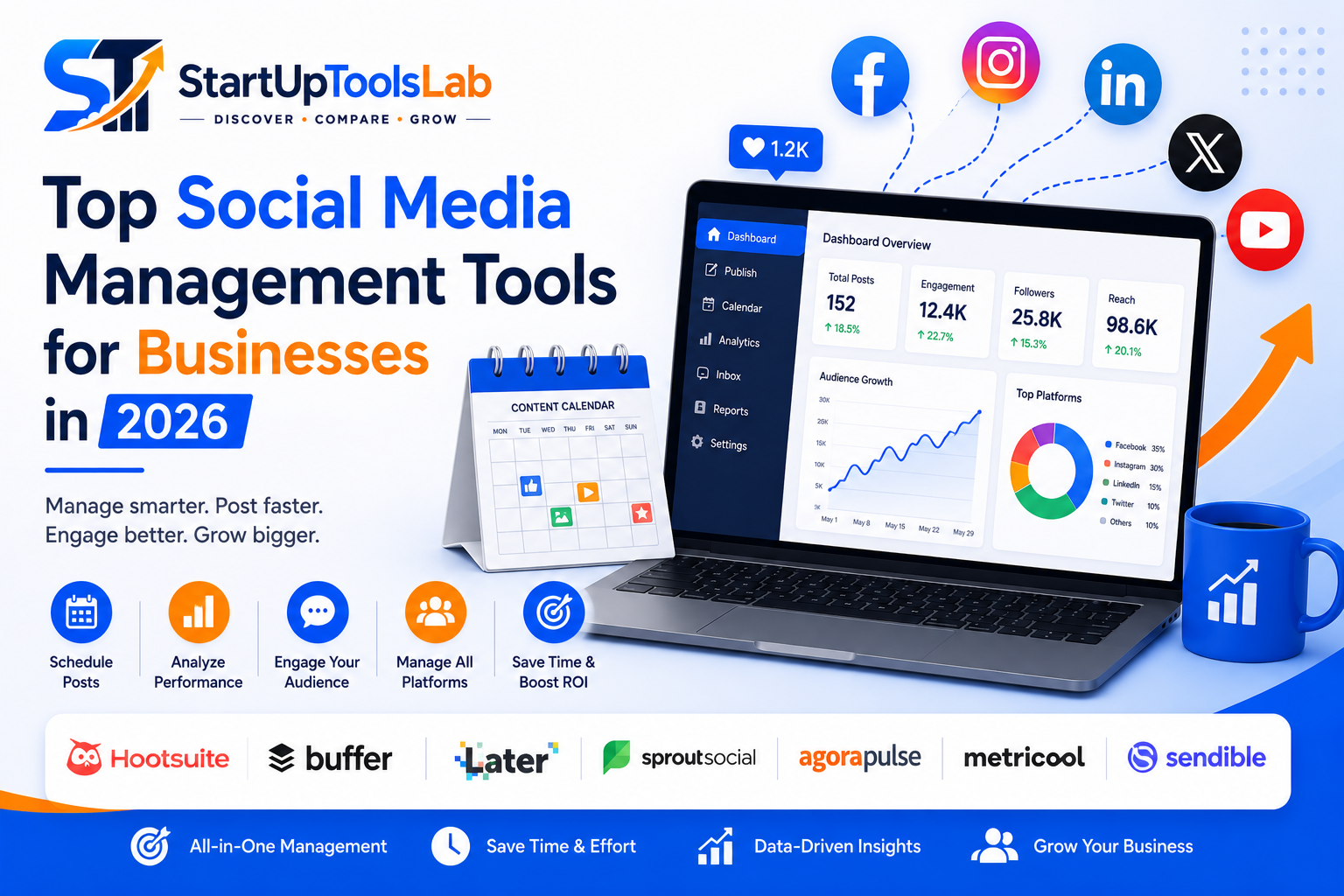
Top Social Media Management Tools for Businesses in 2026
Social media has become one of the most important marketing channels for modern businesses.
Whether it’s Instagram, Facebook, LinkedIn, TikTok, X (Twitter), Pinterest, or YouTube, businesses are expected to maintain a strong online presence, publish content consistently, engage with audiences, and track performance across multiple platforms.
But managing social media manually can quickly become overwhelming.
That’s why businesses now rely on social media management tools to schedule content, automate publishing, monitor analytics, collaborate with teams, and improve overall marketing efficiency.
In this guide, we’ll cover the top social media management tools for businesses in 2026 and help you choose the best platform for your business goals and budget.
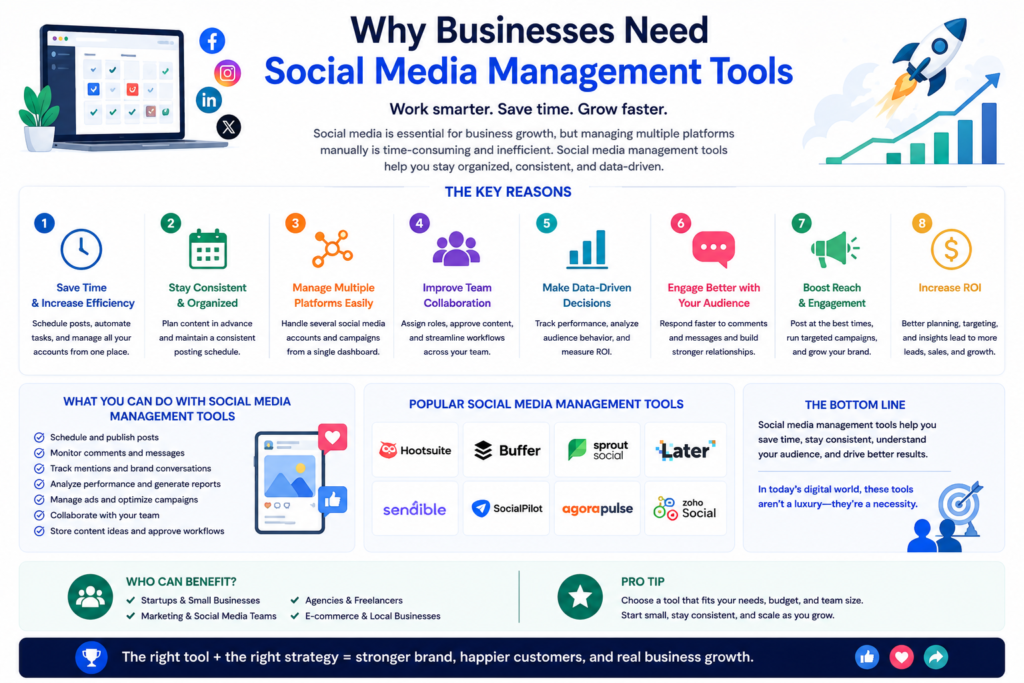
Why Businesses Need Social Media Management Tools
As businesses grow, handling multiple social media accounts manually becomes time-consuming and inefficient.
Social media management platforms help businesses:
- Schedule posts in advance
- Manage multiple accounts from one dashboard
- Improve content consistency
- Track analytics and engagement
- Collaborate with marketing teams
- Save time through automation
- Monitor brand mentions and conversations
Using the right tools allows businesses to focus more on strategy and content quality instead of repetitive manual tasks.
What Makes a Good Social Media Management Tool?
Before selecting a platform, businesses should evaluate the features that matter most.
Important Features to Look For
Content Scheduling
The ability to schedule posts across multiple platforms is essential.
Analytics and Reporting
Detailed insights help businesses improve engagement and content performance.
Team Collaboration
Growing businesses need approval workflows and collaborative publishing.
Automation
Automation saves time and improves consistency.
Multi-Platform Support
The best tools manage all major social media platforms from one place.
Affordability
Pricing should align with business size and marketing needs.
1. Hootsuite
Hootsuite is one of the most well-known social media management platforms for businesses.
It allows teams to manage multiple social media accounts from one centralized dashboard.
Key Features
- Multi-platform scheduling
- Social media monitoring
- Analytics and reporting
- Team collaboration
- Content calendar
Why Businesses Use Hootsuite
Hootsuite is reliable, scalable, and suitable for businesses managing large volumes of content across multiple platforms.
Best For
- Agencies
- Medium-sized businesses
- Marketing teams
- Enterprises
2. Buffer
Buffer is popular because of its simplicity and beginner-friendly interface.
It helps businesses schedule posts, track performance, and maintain consistent publishing schedules.
Main Features
- Content scheduling
- Analytics
- Team collaboration
- Engagement tools
- Landing page builder
Why Small Businesses Love Buffer
Buffer is easy to use and affordable, making it ideal for startups and small businesses.
Best For
- Startups
- Freelancers
- Small businesses
- Content creators
3. Sprout Social
Sprout Social focuses heavily on analytics, engagement, and customer relationship management.
Best Features
- Advanced analytics
- Social listening
- CRM integrations
- Team workflows
- Audience engagement tools
Why Businesses Choose Sprout Social
Its reporting and customer engagement features are especially valuable for brands prioritizing audience relationships.
Best For
- Growing businesses
- Brands
- Customer-focused companies
- Marketing agencies
4. Later
Later is especially popular among visual brands and Instagram-focused businesses.
Key Features
- Visual content calendar
- Instagram scheduling
- Link-in-bio tools
- Analytics
- TikTok scheduling
Why It’s Popular
Later simplifies visual content planning and helps brands maintain aesthetic consistency.
Best For
- Influencers
- Fashion brands
- Ecommerce businesses
- Content creators
5. SocialBee
SocialBee focuses strongly on content organization and evergreen posting.
Main Features
- Content categorization
- Evergreen recycling
- AI content assistance
- Scheduling automation
- Analytics
Why Businesses Like SocialBee
It helps businesses maximize content lifespan and maintain consistent activity across platforms.
Best For
- Small businesses
- Coaches
- Entrepreneurs
- Personal brands
6. Metricool
Metricool combines scheduling, analytics, ad tracking, and competitor monitoring into one platform.
Features Include
- Content scheduling
- Social analytics
- Ad management
- Competitor tracking
- Link tracking
Why It’s Growing Fast
Metricool offers strong analytics and reporting at relatively affordable pricing.
Best For
- Digital marketers
- Agencies
- Growing startups
7. Canva
Although Canva is mainly known as a design platform, it now includes social media scheduling and content planning features.
Best Features
- Graphic design
- Social media templates
- Video editing
- Content scheduling
- Team collaboration
Why Businesses Use Canva
It allows businesses to create and publish content from one platform without requiring advanced design skills.
Best For
- Small businesses
- Content creators
- Startups
- Social media managers
8. Meta Business Suite
Meta Business Suite helps businesses manage Facebook and Instagram accounts directly from Meta’s ecosystem.
Key Features
- Facebook scheduling
- Instagram publishing
- Messaging management
- Insights and analytics
- Ad management
Main Advantage
It’s free and integrates directly with Meta platforms.
Best For
- Facebook marketing
- Instagram businesses
- Local businesses
How to Choose the Right Social Media Management Tool
Not every business needs enterprise-level software.
The right platform depends on:
- Business size
- Number of social accounts
- Marketing goals
- Team size
- Budget
- Content strategy
Best Social Media Tool by Business Type
For Beginners
Buffer
For Advanced Analytics
Sprout Social
For Instagram and Visual Brands
Later
For Content Automation
SocialBee
For Large Teams and Agencies
Hootsuite
For Affordable All-in-One Management
Metricool
Common Social Media Marketing Mistakes Businesses Make
Many businesses focus too heavily on posting frequency instead of strategy and quality.
Common Mistakes Include:
- Inconsistent posting
- Ignoring analytics
- Posting without audience research
- Using the same content everywhere
- Over-promoting products
- Ignoring audience engagement
Successful social media marketing requires:
- Consistency
- Strong branding
- Audience understanding
- Valuable content
- Data-driven decisions
Future of Social Media Management in 2026
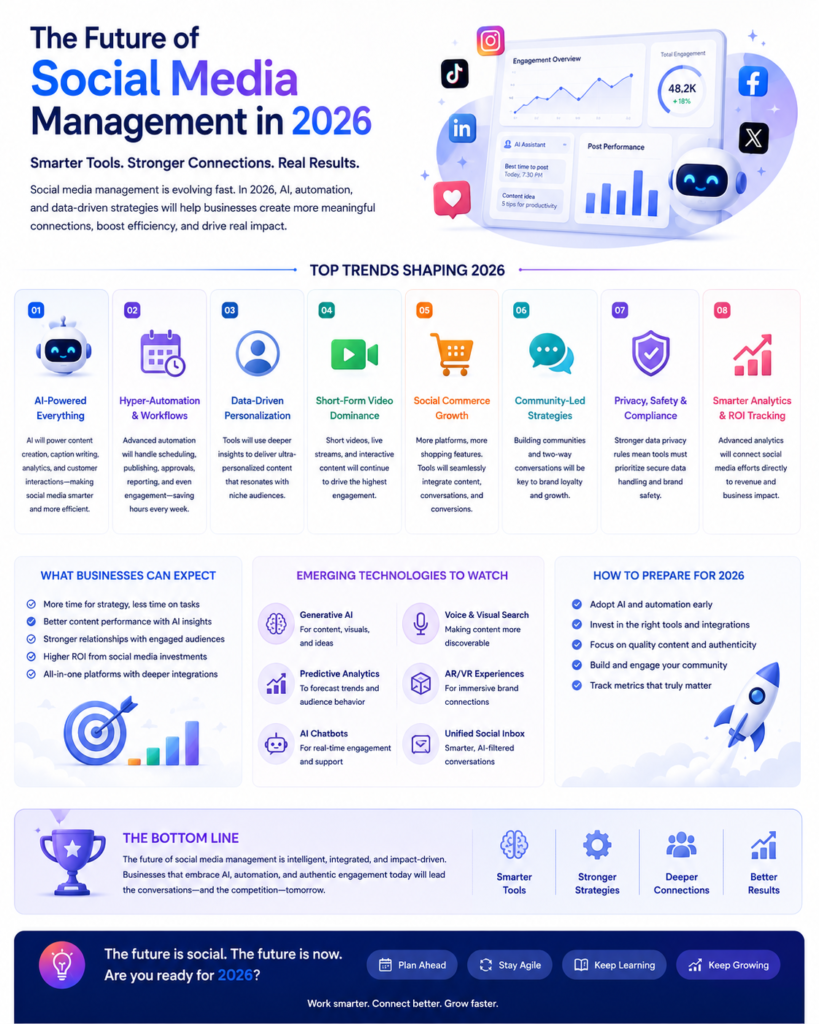
Social media management is rapidly evolving with AI-powered automation and analytics.
Modern platforms now offer:
- AI caption generation
- Automated scheduling
- Smart analytics
- Predictive engagement insights
- AI-powered content recommendations
Businesses using automation strategically can save time while improving content performance and audience engagement.
Final Thoughts
Social media management tools are no longer optional for modern businesses — they are essential for maintaining consistent online growth and audience engagement.
The right platform helps businesses automate scheduling, improve collaboration, track analytics, and create stronger social media strategies without overwhelming marketing teams.
Whether you’re a startup, agency, ecommerce brand, content creator, or growing business, investing in the right social media management tool can significantly improve productivity and long-term marketing performance.
In 2026, businesses that combine creativity with smart automation tools will have the strongest competitive advantage across social platforms.