Best Accounting Software for Small Businesses in 2026
Managing finances is one of the most important parts of running a successful small business.
From tracking expenses and creating invoices to handling payroll, taxes, and financial reporting, proper accounting systems help businesses stay organized, profitable, and prepared for growth.
But handling everything manually can quickly become stressful and time-consuming.
That’s why modern businesses rely on accounting software to automate financial operations, reduce errors, improve cash flow management, and save valuable time.
In 2026, accounting tools have become smarter than ever, offering AI-powered automation, cloud accessibility, real-time reporting, and seamless integrations with banks, payment platforms, and ecommerce systems.
In this guide, we’ll cover the best accounting software for small businesses in 2026 and help you choose the right platform based on your business needs and budget.
Why Small Businesses Need Accounting Software
Many small business owners initially manage finances manually using spreadsheets or paper records.
While that may work temporarily, it becomes difficult as businesses grow.
Accounting software helps businesses:
- Track income and expenses
- Automate invoicing
- Manage payroll
- Monitor cash flow
- Generate financial reports
- Prepare taxes
- Reduce accounting errors
- Improve financial visibility
The right accounting platform saves time while helping businesses make smarter financial decisions.
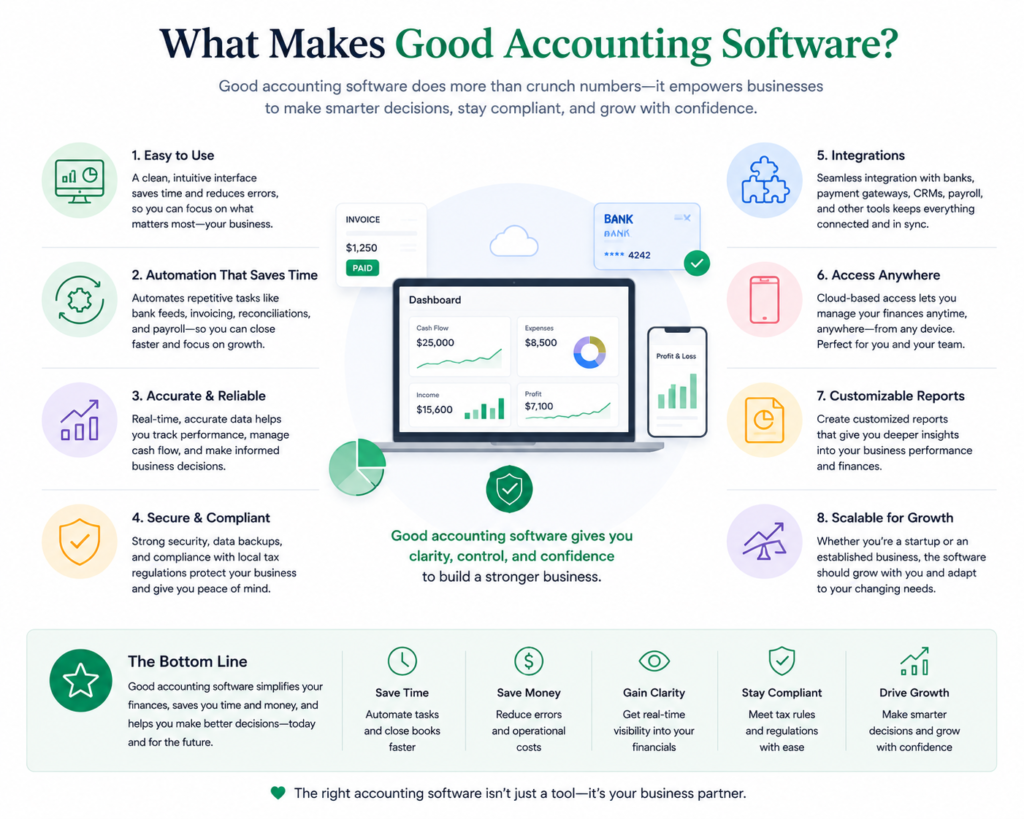
What Makes Good Accounting Software?
Before choosing a platform, businesses should understand which features matter most.
Important Features to Look For
Invoicing and Billing
Professional invoicing improves cash flow and customer management.
Expense Tracking
Businesses need clear visibility into spending and profitability.
Payroll Management
Payroll automation saves time and reduces errors.
Tax Preparation
Good accounting software simplifies tax calculations and reporting.
Cloud Accessibility
Cloud-based systems allow business owners to access financial data from anywhere.
Integrations
The best platforms integrate with banks, e-commerce stores, CRMs, and payment gateways.
Scalability
The software should support future business growth.
1. QuickBooks
QuickBooks remains one of the most popular accounting solutions for small businesses worldwide.
It offers a complete accounting system designed for startups, e-commerce brands, freelancers, and growing businesses.
Key Features
- Automated bookkeeping
- Invoicing and billing
- Expense tracking
- Payroll management
- Tax preparation
- Financial reporting
- Cash flow tracking
Why Small Businesses Love QuickBooks
QuickBooks combines automation, scalability, and strong reporting tools in one platform.
Its user-friendly dashboard makes financial management easier even for non-accountants.
Best For
- Small businesses
- E-commerce stores
- SaaS startups
- Service businesses
- Growing companies
2. Xero
Xero is known for its modern interface, cloud accessibility, and strong collaboration features.
Main Features
- Real-time accounting
- Unlimited users
- Expense management
- Payroll integration
- Multi-currency support
- Financial reporting
Why Businesses Choose Xero
Xero works especially well for remote teams and businesses needing cloud-based collaboration.
Its clean interface and automation tools significantly simplify financial workflows.
Best For
- Remote businesses
- Agencies
- Startups
- International businesses
3. FreshBooks
FreshBooks is one of the best accounting tools for freelancers and service-based businesses.
Best Features
- Easy invoicing
- Client management
- Expense tracking
- Time tracking
- Financial reporting
Why It’s Popular
FreshBooks focuses heavily on simplicity and ease of use.
It’s ideal for business owners who want accounting software without unnecessary complexity.
Best For
- Freelancers
- Consultants
- Agencies
- Small service businesses
4. Wave
Wave is one of the best free accounting software options for small businesses.
Features Include
- Invoicing
- Expense tracking
- Receipt scanning
- Financial reporting
- Basic bookkeeping
Why Small Businesses Like Wave
Wave offers genuinely useful accounting features without requiring expensive subscriptions.
It’s especially attractive for startups and budget-conscious entrepreneurs.
Best For
- Freelancers
- Startups
- Small businesses
- Solopreneurs
5. Zoho Books
Zoho Books provides affordable accounting software with strong automation and business integrations.
Key Features
- Automated workflows
- Invoice management
- Expense tracking
- Tax compliance
- Inventory management
Why Businesses Use Zoho Books
It integrates smoothly with other Zoho business products, making it ideal for companies already using the Zoho ecosystem.
Best For
- Small businesses
- Startups
- Growing teams
6. Sage Intacct
Sage Intacct is designed for businesses needing advanced financial management and reporting.
Main Features
- Advanced reporting
- Financial automation
- Multi-entity management
- Budgeting and forecasting
Why Businesses Choose Sage Intacct
It offers enterprise-level accounting capabilities while remaining cloud-based and scalable.
Best For
- Medium-sized businesses
- Scaling companies
- Financial teams
7. NetSuite
NetSuite combines ERP and accounting functionality into one platform.
Features Include
- Financial management
- Inventory management
- CRM integration
- Business analytics
- Automation
Why It’s Powerful
NetSuite helps businesses centralize operations beyond just accounting.
Best For
- Large small businesses
- Scaling enterprises
- Ecommerce companies
How to Choose the Right Accounting Software
Not every accounting platform fits every business.
The best choice depends on:
- Business size
- Budget
- Industry
- Team size
- Financial complexity
- Growth plans
Best Accounting Software by Business Type
Best Overall Accounting Software
QuickBooks
Best Free Accounting Software
Wave
Best for Freelancers
FreshBooks
Best Cloud-Based Accounting Platform
Xero
Best for Growing Businesses
Zoho Books
Best for Advanced Financial Management
Sage Intacct
Common Accounting Mistakes Small Businesses Make
Many businesses struggle financially because of poor accounting habits.
Common Mistakes Include:
- Mixing personal and business finances
- Ignoring cash flow
- Delaying bookkeeping
- Missing tax deadlines
- Not tracking expenses properly
- Using outdated systems
Modern accounting software helps businesses avoid many of these costly mistakes.
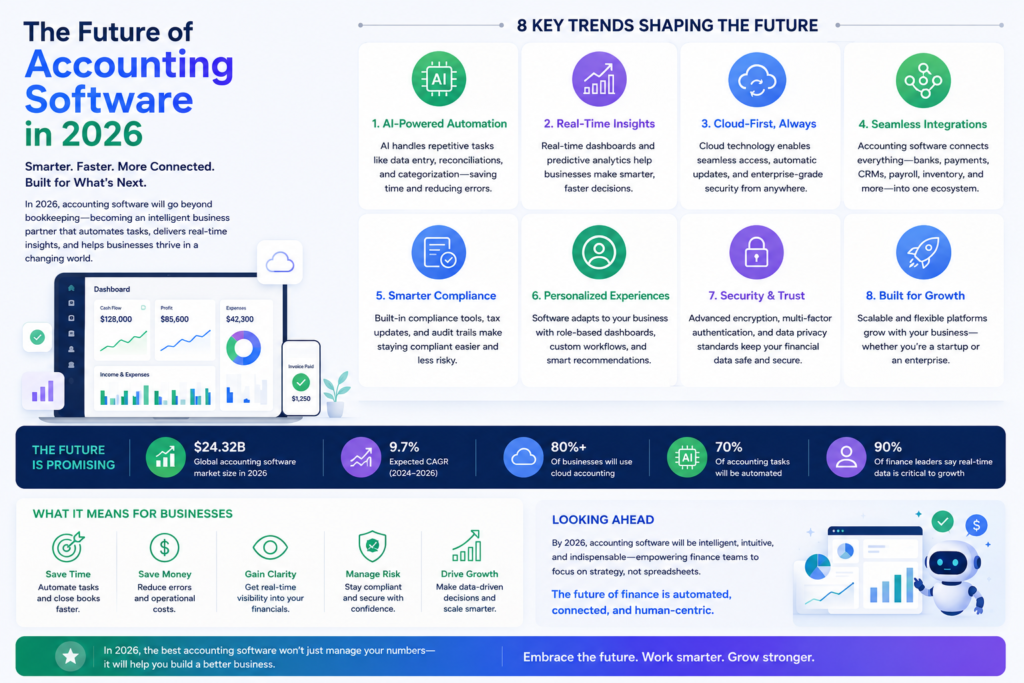
Future of Accounting Software in 2026
Accounting technology is evolving rapidly with AI-powered automation and smarter financial insights.
Modern accounting tools now include:
- AI bookkeeping
- Automated invoice processing
- Predictive cash flow analysis
- Smart financial forecasting
- Real-time reporting
- Automated tax calculations
Businesses adopting automation early can save significant time while improving financial accuracy
Final Thoughts
Accounting software has become essential for modern small businesses.
The right platform helps businesses automate financial operations, improve cash flow management, reduce errors, and gain clearer visibility into company performance.
Whether you’re a freelancer, startup founder, ecommerce business owner, or growing company, investing in the right accounting software can improve operational efficiency and support long-term growth.
In 2026, businesses using cloud-based, AI-powered accounting systems will have a major advantage in managing finances efficiently and scaling sustainably.