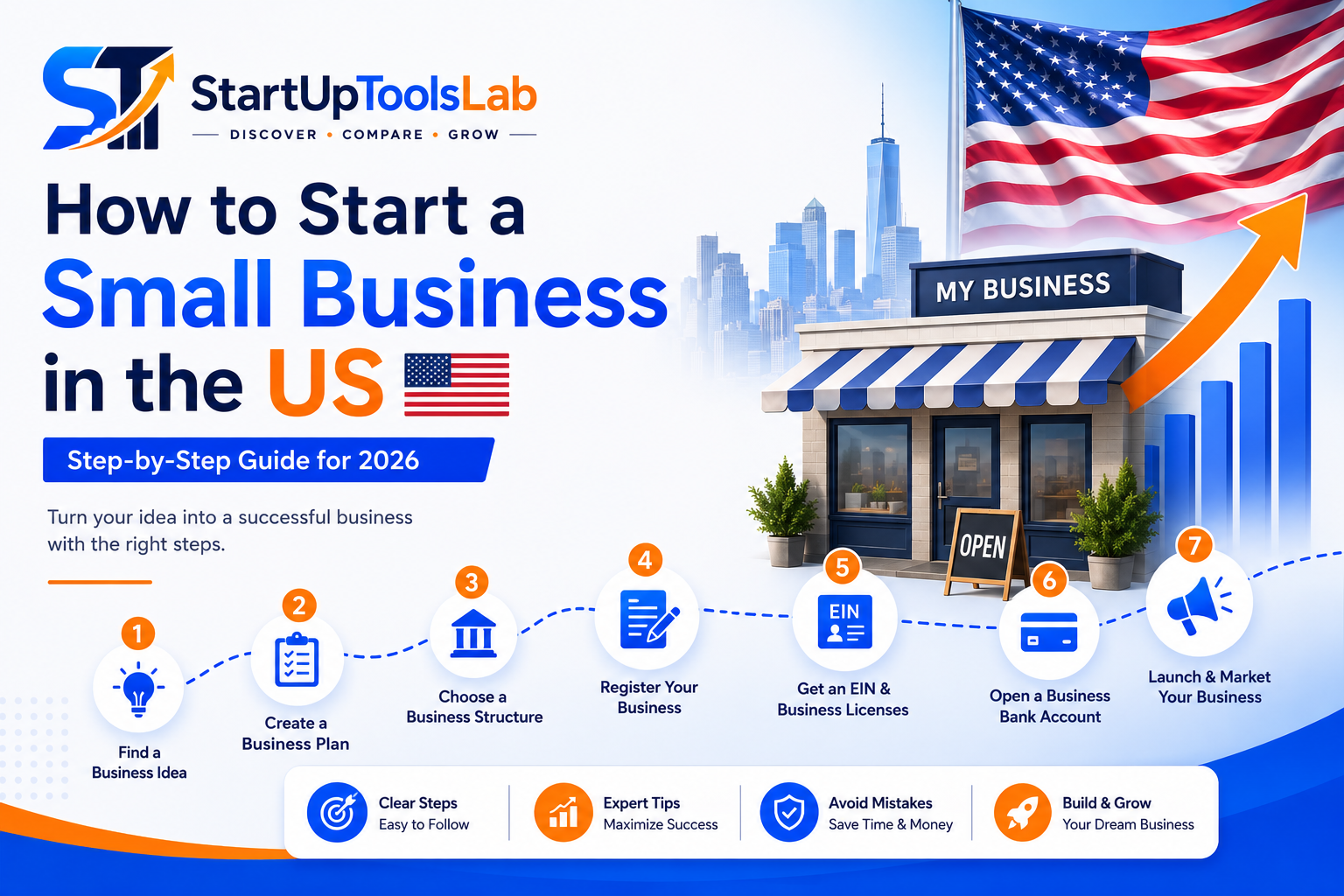
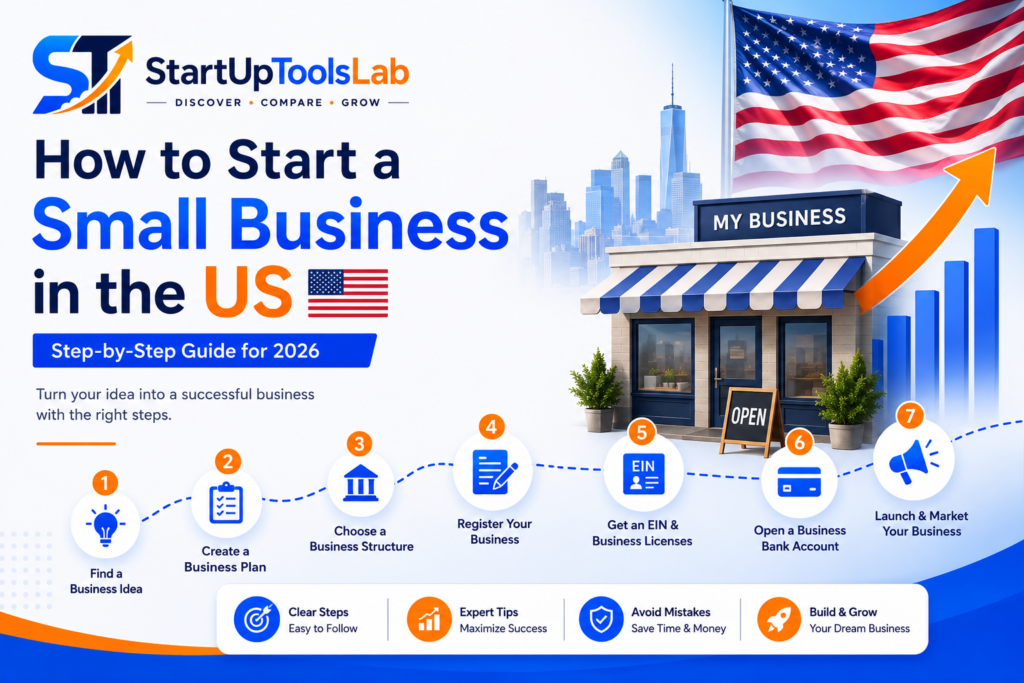
How to Start a Small Business in the US (Step-by-Step Guide for 2026)
Starting a small business in the United States can be one of the most rewarding ways to build financial freedom, independence, and long-term growth.
Whether you want to launch an online store, service business, agency, consulting company, local business, or tech startup, the US remains one of the best countries in the world for entrepreneurship.
But while starting a business sounds exciting, the process can feel overwhelming for beginners.
From choosing a business idea and registering your company to opening a bank account, managing taxes, and building a brand, there are several important steps involved.
The good news is that starting a small business in 2026 is much easier than it used to be, thanks to online business registration systems, cloud-based software, AI tools, and affordable SaaS platforms.
In this guide, we’ll walk through exactly how to start a small business in the US step-by-step, even if you’re starting from scratch.
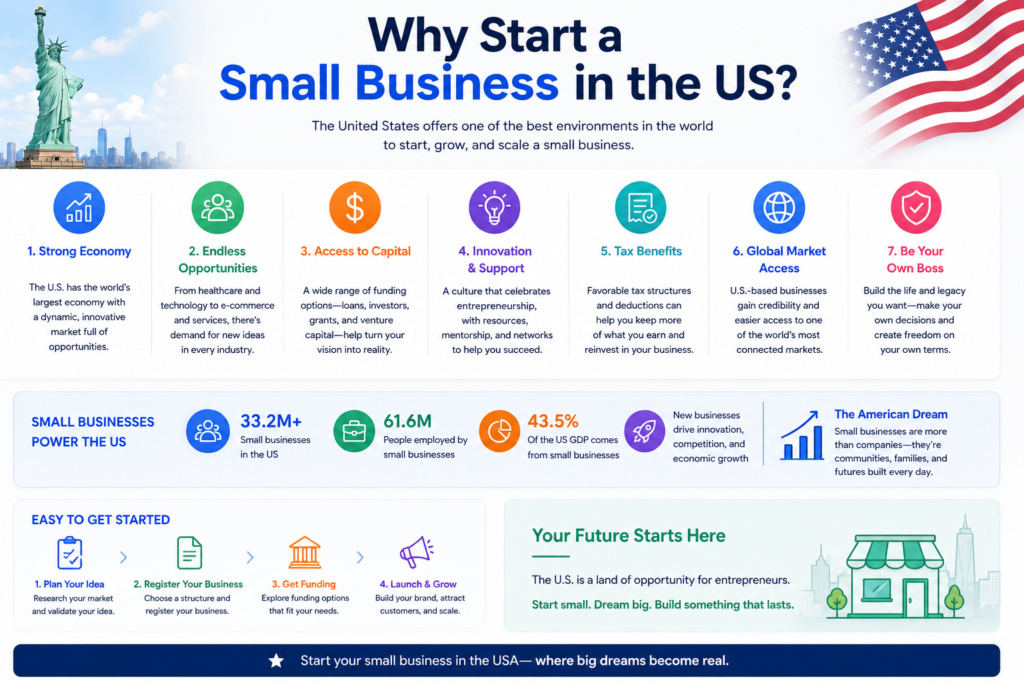
Why Start a Small Business in the US?
The United States offers one of the strongest business environments globally.
Entrepreneurs benefit from:
- Large consumer markets
- Strong digital infrastructure
- Business-friendly systems
- Access to online tools
- E-commerce growth
- Startup funding opportunities
- Flexible business structures
Small businesses also contribute massively to the US economy, creating millions of jobs and opportunities every year.
Step 1: Choose a Business Idea
Every successful business starts with solving a problem or fulfilling a need.
Before registering anything, focus on choosing the right business idea.
Popular Small Business Ideas in 2026
- Ecommerce stores
- Digital marketing agencies
- Freelance services
- AI consulting
- Content creation
- Online coaching
- SaaS businesses
- Web development
- Local service businesses
- Social media management
How to Choose the Right Business Idea
A strong business idea should:
- Solve a real problem
- Have market demand
- Match your skills or interests
- Be scalable
- Have profit potential
Helpful AI and Research Tools
OpenAI ChatGPT
Can help brainstorm business ideas, marketing strategies, and business plans.
Google Trends
Helps identify trending products and business opportunities.
Semrush
Useful for market research, competitor analysis, and keyword demand.
Step 2: Research Your Market
Many businesses fail because they skip market research.
Before investing money, understand:
- Your target audience
- Competitors
- Pricing trends
- Customer pain points
- Industry demand
Questions to Ask
- Who are your competitors?
- What makes your business different?
- Are customers already paying for similar solutions?
- What problem are you solving?
Good research reduces risk and improves decision-making.
Step 3: Choose a Business Structure
Your business structure affects taxes, liability, and legal responsibilities.
Common US Business Structures
Sole Proprietorship
Simplest structure for freelancers and solo businesses.
LLC (Limited Liability Company)
One of the most popular structures for small businesses because it provides liability protection and flexible taxation.
Corporation
Best for larger businesses seeking investors or advanced scaling.
Partnership
Suitable for businesses with multiple owners.
Why Many Small Businesses Choose an LLC
An LLC helps:
- Protect personal assets
- Improve business credibility
- Simplify taxes
- Separate business and personal finances
For many startups and online businesses, LLCs offer the best balance between simplicity and protection.
Step 4: Register Your Business
Once you choose a structure, register your business legally.
Registration Usually Includes:
- Choosing a business name
- Filing formation documents
- Paying state filing fees
Requirements vary depending on the state where you operate.
Helpful Registration Platforms
LegalZoom
Helps entrepreneurs register businesses and manage legal documents.
ZenBusiness
Provides affordable LLC formation services for startups.
Incfile
Popular for affordable business registration services.
Step 5: Get an EIN (Employer Identification Number)
An EIN is like a Social Security number for your business.
You’ll need it for:
- Taxes
- Hiring employees
- Opening business bank accounts
- Payroll systems
Businesses can obtain an EIN directly from the:
The process is free and usually takes only a few minutes online.
Step 6: Open a Business Bank Account
Never mix personal and business finances.
A dedicated business account helps:
- Simplify accounting
- Improve professionalism
- Organize taxes
- Track expenses properly
Popular Business Banking Options
Chase
Bank of America
Novo
Mercury
Online banking platforms are especially popular among startups and remote businesses.
Step 7: Set Up Accounting and Financial Systems
Financial organization is essential from day one.
Best Accounting Tools for Small Businesses
QuickBooks
Helps with bookkeeping, payroll, invoicing, and taxes.
Xero
Great for cloud-based accounting and remote teams.
Wave
Excellent free option for startups and freelancers.
Step 8: Create a Business Website
Every modern business needs an online presence.
A website helps businesses:
- Build credibility
- Generate leads
- Sell products
- Improve visibility
- Support marketing efforts
Best Website Platforms
WordPress
Highly flexible and SEO-friendly.
Shopify
Best for e-commerce businesses.
Wix
Beginner-friendly website builder.
Step 9: Build Your Brand Identity
Strong branding helps businesses stand out in competitive markets.
Important Branding Elements
- Business name
- Logo
- Brand colors
- Website design
- Social media presence
- Messaging tone
Helpful Branding Tools
Canva
Excellent for creating logos, social media graphics, and branding materials.
Step 10: Start Marketing Your Business
Without marketing, customers won’t know your business exists.
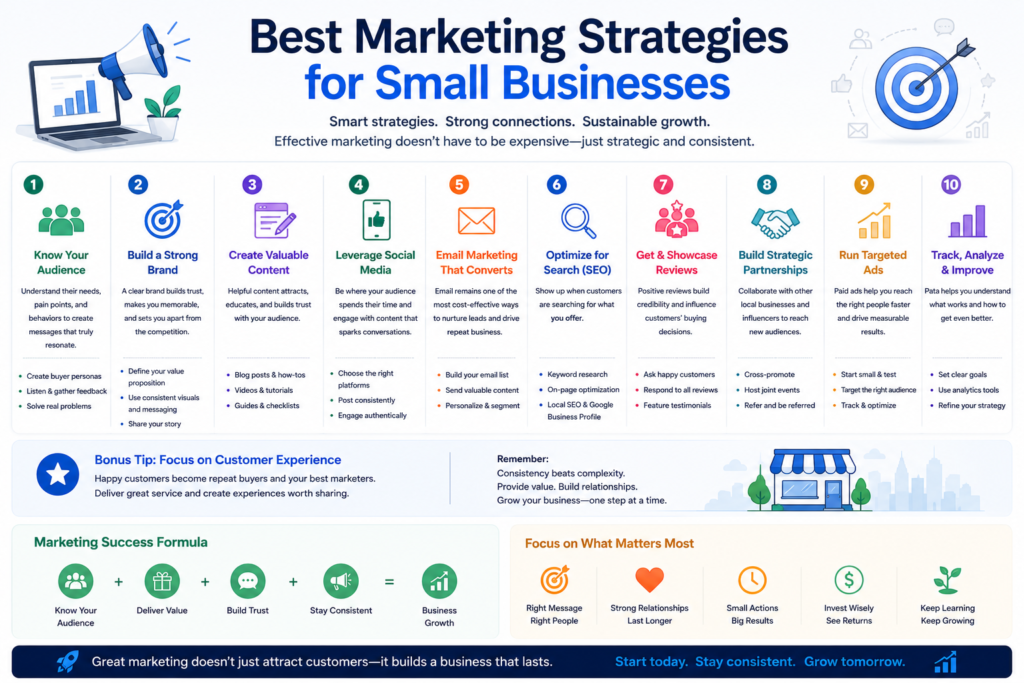
Best Marketing Strategies for Small Businesses
SEO (Search Engine Optimization)
Helps businesses generate long-term organic traffic.
Social Media Marketing
Builds audience engagement and brand awareness.
Email Marketing
Improves customer retention and sales.
Content Marketing
Builds authority and trust online.
Best Marketing Tools for Beginners
Semrush
Keyword research and SEO optimization.
Mailchimp
Email campaigns and automation.
Buffer
Social media scheduling and content planning.
Step 11: Automate Your Business Operations
Automation saves time and improves efficiency.
Helpful Business Automation Tools
Zapier
Connects apps and automates workflows.
Notion
Project management and business organization.
ClickUp
Task management and team productivity.
Common Mistakes New Business Owners Make
Many startups struggle because of avoidable mistakes.
Common Mistakes Include:
- Skipping market research
- Overspending early
- Ignoring financial management
- Not building systems
- Weak branding
- Trying to grow too quickly
- Neglecting marketing
Starting lean and building gradually usually works better long-term.
How Much Does It Cost to Start a Small Business in the US?
Startup costs vary depending on the business model.
Typical Costs May Include:
- Business registration fees
- Website hosting
- Software subscriptions
- Marketing expenses
- Business licenses
- Inventory or equipment
Many online businesses can now start with relatively low investment compared to traditional businesses.
Future of Small Businesses in 2026
Technology is making entrepreneurship more accessible than ever.
Modern businesses now leverage:
- AI-powered automation
- Cloud-based software
- Remote teams
- Ecommerce platforms
- Digital marketing tools
- Online payment systems
Small businesses that adopt digital systems early often scale much faster and operate more efficiently.
Final Thoughts
Starting a small business in the US may seem complicated initially, but breaking the process into clear steps makes it much more manageable.
The key is to:
- Choose the right business idea
- Research your market
- Register properly
- Organize finances early
- Build strong systems
- Focus on marketing and customer value
With modern SaaS platforms, AI tools, cloud software, and automation systems available in 2026, entrepreneurs can now launch and scale businesses faster than ever before.
The most successful businesses aren’t always the biggest ones — they’re often the ones with the best systems, consistency, and long-term vision.