
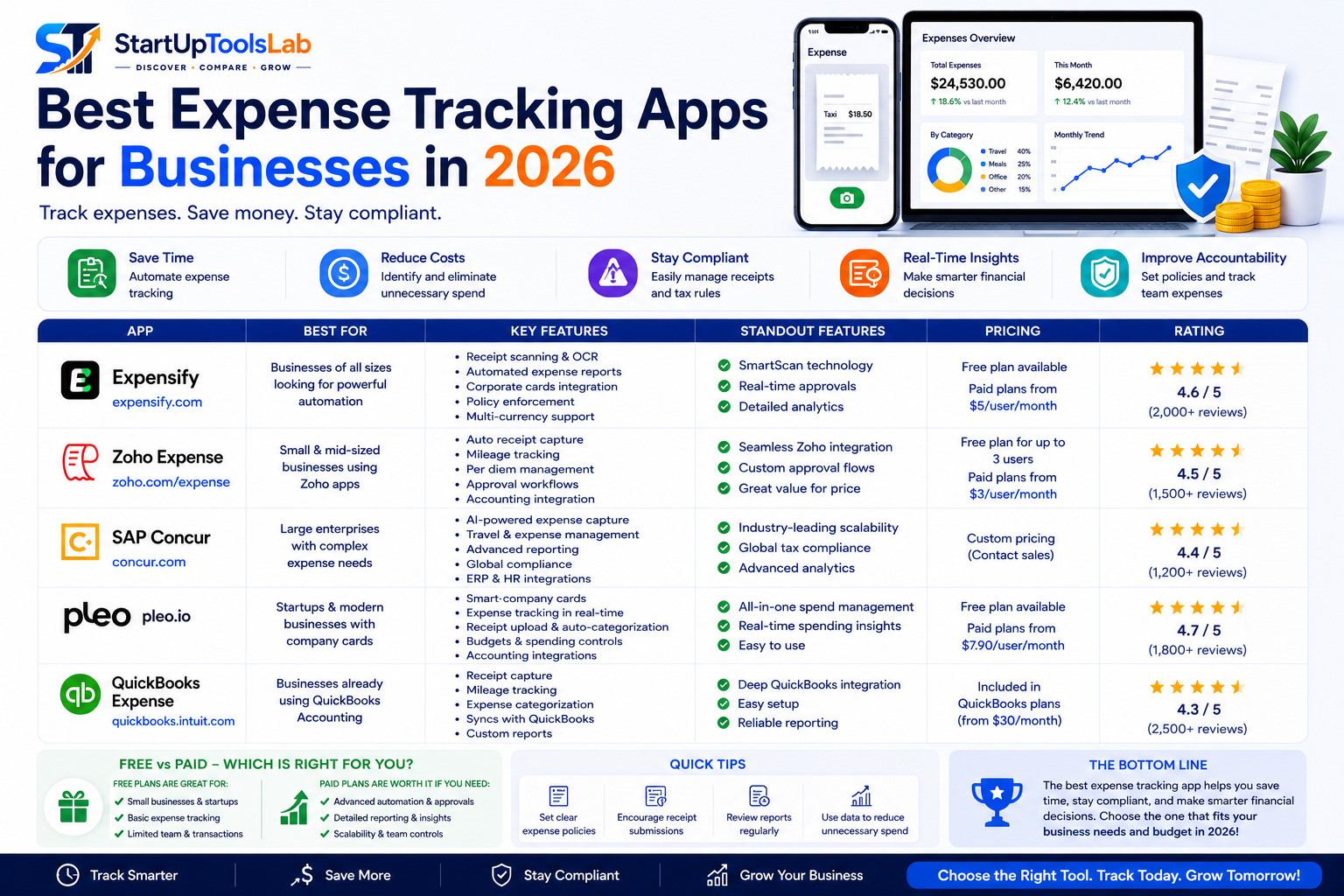
Best Expense Tracking Apps for Businesses in 2026
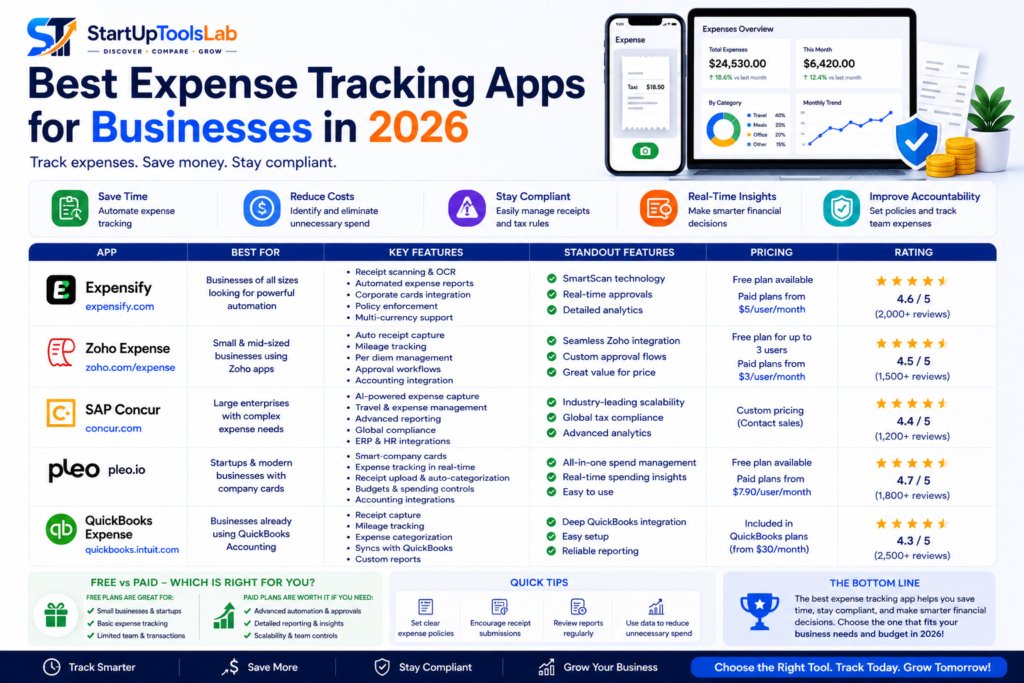
Managing business expenses properly is one of the most important parts of running a successful company.
Whether you’re a freelancer, startup founder, small business owner, or growing enterprise, keeping track of expenses manually can quickly become stressful, disorganized, and time-consuming.
From employee reimbursements and travel expenses to subscriptions, invoices, and operational costs, businesses handle hundreds of financial transactions every month.
That’s why modern businesses rely on expense tracking apps to automate financial management, organize receipts, monitor spending, and improve budgeting.
In 2026, expense management software has become smarter than ever with AI-powered automation, real-time reporting, cloud integrations, receipt scanning, and advanced financial analytics.
In this guide, we’ll cover the best expense tracking apps for businesses in 2026 and help you choose the right platform based on your business size and financial management needs.
Why Businesses Need Expense Tracking Apps
Many businesses initially track expenses using spreadsheets or manual bookkeeping methods.
While that may work temporarily, it often creates:
- Lost receipts
- Inaccurate reporting
- Budget confusion
- Tax preparation difficulties
- Reimbursement delays
- Financial visibility problems
Expense tracking software helps businesses:
- Monitor spending in real time
- Automate expense categorization
- Simplify reimbursements
- Improve financial accuracy
- Prepare taxes more easily
- Reduce manual bookkeeping work
The right system improves financial organization while saving valuable time.
What Makes a Good Expense Tracking App?
Before choosing a platform, businesses should understand which features matter most.
Important Features to Look For
Receipt Scanning
Apps should automatically scan and store receipts digitally.
Expense Categorization
Automatic categorization simplifies reporting and budgeting.
Reporting and Analytics
Detailed reports help businesses monitor spending patterns.
Integrations
The best apps connect with accounting software, banks, and payment systems.
Mobile Accessibility
Business owners need expense management on the go.
Automation
Automation reduces manual data entry and improves efficiency.
Reimbursement Management
Useful for businesses managing employee expenses.
1. Expensify
Expensify is one of the most popular expense management tools for businesses of all sizes.
It simplifies expense reporting, receipt scanning, reimbursements, and financial approvals.
Key Features
- Smart receipt scanning
- Expense categorization
- Reimbursement automation
- Corporate card integration
- Approval workflows
- Real-time expense tracking
Why Businesses Love Expensify
Its automation features significantly reduce manual bookkeeping and expense reporting tasks.
Best For
- Startups
- Small businesses
- Remote teams
- Growing companies
2. QuickBooks
QuickBooks offers powerful expense tracking alongside full accounting functionality.
Main Features
- Expense tracking
- Bank synchronization
- Receipt capture
- Tax preparation
- Financial reporting
- Invoicing
Why It’s Popular
Businesses using QuickBooks can centralize accounting and expense management in one platform.
Best For
- Small businesses
- Ecommerce companies
- Service businesses
- Growing startups
3. FreshBooks
FreshBooks is ideal for freelancers and service-based businesses looking for simple financial management.
Best Features
- Expense tracking
- Receipt organization
- Time tracking
- Client invoicing
- Financial reporting
Why Freelancers Prefer It
FreshBooks combines invoicing and expense management with a very beginner-friendly interface.
Best For
- Freelancers
- Consultants
- Agencies
- Solopreneurs
4. Wave
Wave remains one of the best free expense tracking tools available today.
Features Include
- Expense management
- Receipt scanning
- Financial reporting
- Bank synchronization
- Basic accounting
Why Small Businesses Use Wave
Wave offers surprisingly strong financial tools without requiring expensive subscriptions.
Best For
- Startups
- Small businesses
- Budget-conscious entrepreneurs
5. Zoho Expense
Zoho Expense is a dedicated expense management solution with strong automation capabilities.
Key Features
- Automated expense reporting
- Receipt scanning
- Mileage tracking
- Approval workflows
- Multi-currency support
Why Businesses Like It
Its affordability and automation features make it highly attractive for growing businesses.
Best For
- Small businesses
- Remote teams
- International businesses
6. SAP Concur
SAP Concur is designed for larger businesses needing advanced expense and travel management.
Main Features
- Expense automation
- Travel expense management
- Corporate card integration
- Compliance tools
- Advanced reporting
Why Enterprises Use It
It helps businesses manage large-scale employee expenses and travel reimbursements efficiently.
Best For
- Medium-sized businesses
- Enterprises
- Corporate teams
7. Xero
Xero combines cloud accounting with strong expense management features.
Best Features
- Expense claims
- Receipt capture
- Bank integrations
- Real-time financial tracking
- Multi-user collaboration
Why It’s Valuable
Xero works especially well for remote businesses and distributed financial teams.
Best For
- Startups
- Agencies
- Cloud-based businesses
8. Ramp
Ramp combines corporate spending management with expense tracking and financial automation.
Key Features
- Corporate cards
- Automated expense tracking
- Spending insights
- AI-powered savings recommendations
- Real-time reporting
Why Businesses Choose Ramp
It helps businesses control spending while simplifying financial operations.
Best For
- Startups
- Scaling companies
- Venture-backed businesses
How to Choose the Right Expense Tracking App
Not every business needs enterprise-level financial software.
The best app depends on:
- Business size
- Budget
- Team size
- Expense volume
- Accounting complexity
- Automation needs
Best Expense Tracking App by Business Type
Best Overall Expense Tracking App
Expensify
Best Free Expense Tracking App
Wave
Best for Full Accounting Integration
QuickBooks
Best for Freelancers
FreshBooks
Best for Automation
Zoho Expense
Best for Corporate Expense Management
SAP Concur
Common Expense Tracking Mistakes Businesses Make
Many businesses struggle financially because of poor expense management habits.
Common Mistakes Include:
- Losing receipts
- Delaying expense recording
- Mixing personal and business expenses
- Ignoring subscription costs
- Poor reimbursement processes
- Lack of budgeting visibility
Modern expense tracking apps help businesses avoid these costly mistakes through automation and organization.
Future of Expense Management in 2026
Expense management software is evolving rapidly with AI-powered financial automation.
Modern platforms now offer:
- AI receipt recognition
- Predictive budgeting
- Automated reimbursements
- Smart spending analysis
- Real-time financial alerts
- AI-generated expense reports
Businesses using automation can reduce administrative workload while improving financial accuracy and visibility.
Final Thoughts
Expense tracking apps have become essential for businesses looking to improve financial organization, budgeting, and operational efficiency.
The right platform can automate expense reporting, simplify reimbursements, improve cash flow visibility, and reduce manual bookkeeping work.
Whether you’re a freelancer, startup founder, small business owner, or growing company, investing in the right expense management software can save time, improve accuracy, and support long-term financial growth.
In 2026, businesses using smart financial automation tools will have a significant advantage in managing expenses efficiently and scaling sustainably.