
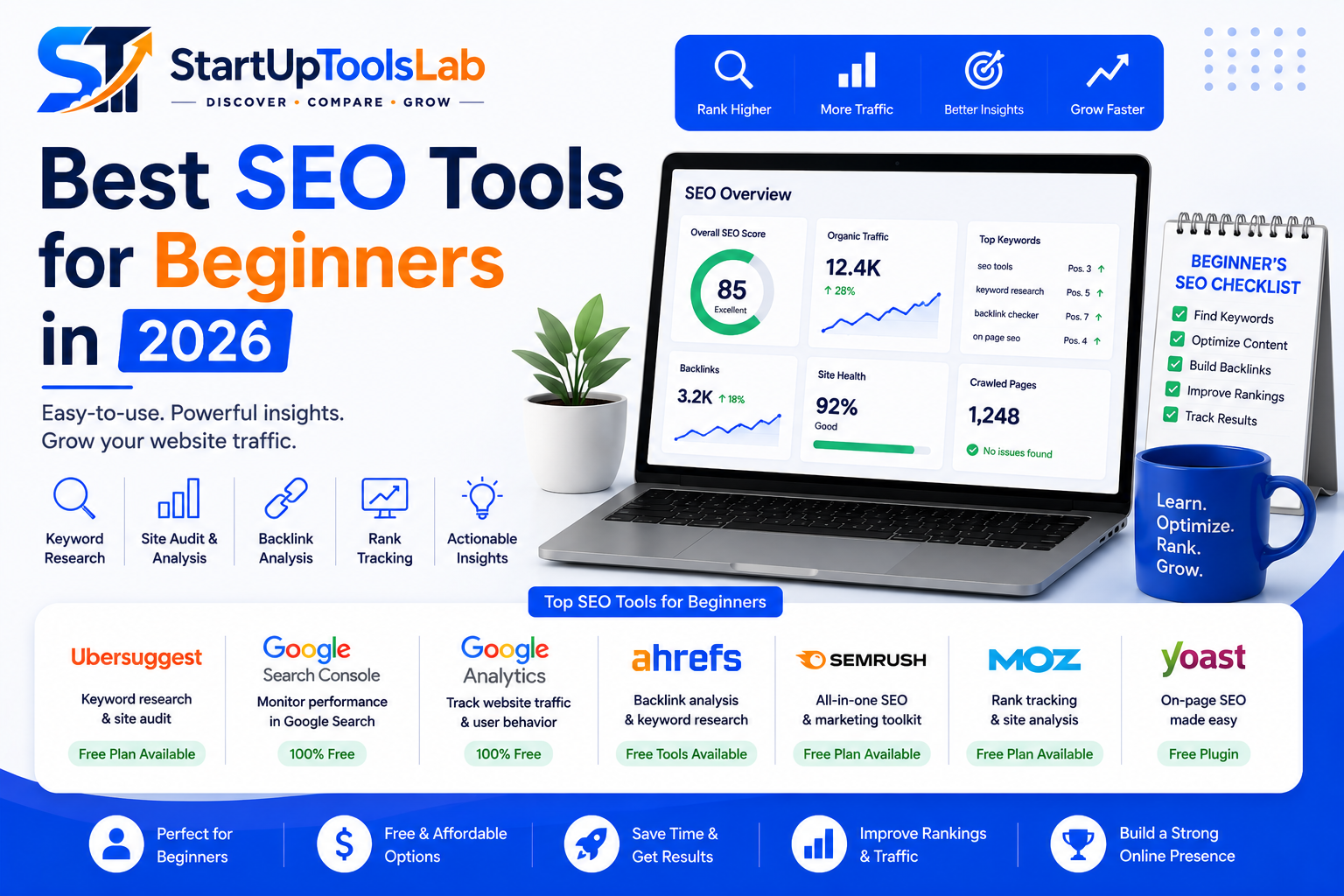
Best SEO Tools for Beginners in 2026
SEO can feel overwhelming when you’re just starting.
Between keyword research, backlinks, technical SEO, content optimization, analytics, and ranking reports, beginners often struggle to understand where to begin and which tools actually matter.
The good news is that modern SEO tools have become much easier to use.
Today, beginner-friendly SEO platforms help businesses, bloggers, freelancers, startups, and content creators improve their Google rankings without needing advanced technical knowledge.
Whether you’re launching a blog, running a small business website, managing an e-commerce store, or learning SEO as a skill, the right tools can save time, simplify workflows, and help you grow organic traffic faster.
In this guide, we’ll cover the best SEO tools for beginners in 2026 and explain how each platform can help improve your website’s search engine performance.
Why SEO Tools Matter for Beginners
SEO is no longer just about adding keywords to pages.
Modern search engine optimization involves:
- Keyword research
- Competitor analysis
- Technical SEO
- Backlink monitoring
- Content optimization
- User experience
- Performance tracking
SEO tools simplify these processes and provide valuable insights that help beginners make smarter decisions.
Benefits of SEO Tools
- Find low-competition keywords
- Improve Google rankings
- Track website performance
- Discover technical SEO issues
- Analyze competitors
- Build better content strategies
- Save time through automation
Using the right tools early can dramatically improve your SEO learning curve and website growth.
What Makes a Good SEO Tool for Beginners?
Not every SEO platform is beginner-friendly.
Some tools are designed for SEO agencies and advanced professionals, while others focus on simplicity and ease of use.
Important Features Beginners Should Look For
Easy Interface
The platform should be simple to navigate and understand.
Keyword Research
Finding searchable keywords is one of the most important SEO skills.
SEO Audits
Good tools identify technical issues affecting rankings.
Competitor Analysis
Understanding competitors helps improve SEO strategies.
Reporting and Analytics
Tracking progress is essential for long-term SEO success.
Affordable Pricing
Beginners often need cost-effective solutions while learning.
1. Semrush
Semrush is one of the most popular SEO tools in the world and an excellent platform for beginners who want to learn SEO professionally.
Key Features
- Keyword research
- Competitor analysis
- Backlink tracking
- Site audits
- Rank tracking
- Content optimization
Why Beginners Love Semrush
Its dashboard is beginner-friendly while still offering powerful professional features.
Semrush also provides useful SEO suggestions and tutorials that help users better understand SEO strategies.
Best For
- Bloggers
- Small businesses
- SEO learners
- Agencies
- Content marketers
2. Ahrefs
Ahrefs is widely respected for backlink analysis and keyword research.
Main Features
- Backlink checker
- Keyword explorer
- Site audit tools
- Competitor research
- Rank tracking
Why It’s Popular
Ahrefs has one of the largest backlink databases available, making it highly valuable for competitor analysis and link-building research.
Best For
- Bloggers
- SEO professionals
- Affiliate marketers
- Content creators
3. Google Search Console
Google Search Console is one of the most important free SEO tools every beginner should use.
Features Include
- Search performance tracking
- Keyword rankings
- Indexing reports
- Mobile usability analysis
- Technical SEO monitoring
Why Beginners Need It
Since the data comes directly from Google, it provides valuable insights into how your website performs in search results.
Best For
- All website owners
- Beginners
- Bloggers
- E-commerce stores
4. Google Analytics
Google Analytics helps beginners understand website traffic and user behavior.
Key Benefits
- Traffic analysis
- Audience insights
- Conversion tracking
- User behavior monitoring
- Marketing performance analysis
Why It Matters for SEO
SEO isn’t only about rankings — understanding user engagement and conversions is equally important.
5. Ubersuggest
Ubersuggest is known for being beginner-friendly and affordable.
Main Features
- Keyword suggestions
- SEO audits
- Traffic analysis
- Backlink data
- Content ideas
Why Beginners Like It
The platform is simple, easy to understand, and less overwhelming compared to some advanced SEO tools.
Best For
- SEO beginners
- Freelancers
- Small business owners
6. Moz Pro
Moz has been one of the most trusted names in SEO for years.
Key Features
- Keyword research
- Domain authority tracking
- Site audits
- Rank tracking
- Link analysis
Why Moz Is Good for Beginners
Moz focuses heavily on SEO education and simplified reporting, making it easier for beginners to understand SEO concepts.
Best For
- Beginners
- Small businesses
- SEO learners
7. Screaming Frog SEO Spider
Screaming Frog helps identify technical SEO issues on websites.
Main Features
- Broken link detection
- Site crawling
- Metadata analysis
- Redirect monitoring
- Technical SEO audits
Why It’s Useful
Technical SEO becomes much easier when beginners can visually identify website issues.
Best For
- Technical SEO learning
- Website audits
- Developers
- SEO specialists
8. Yoast SEO
Yoast SEO is one of the best SEO plugins for WordPress beginners.
Features Include
- Content optimization
- Meta title editing
- XML sitemaps
- Readability analysis
- SEO recommendations
Why Beginners Use Yoast
It simplifies on-page SEO directly inside WordPress.
Best For
- Bloggers
- WordPress websites
- Content creators
9. Surfer SEO
Surfer SEO focuses on content optimization and on-page SEO improvements.
Best Features
- Content scoring
- Keyword suggestions
- SERP analysis
- SEO writing assistance
Why It’s Popular
It helps beginners create SEO-friendly content that aligns better with Google ranking factors.
Best For
- Bloggers
- Content marketers
- SEO writers
How to Choose the Right SEO Tool
Not every beginner needs expensive enterprise-level SEO software.
The right tool depends on:
- Budget
- Learning goals
- Website size
- SEO experience
- Business needs
Best SEO Tool by Use Case
Best Overall SEO Tool
Semrush
Best Free SEO Tool
Google Search Console
Best for Backlink Analysis
Ahrefs
Best for WordPress SEO
Yoast SEO
Best Budget-Friendly Tool
Ubersuggest
Best for Content Optimization
Surfer SEO
Common SEO Mistakes Beginners Make
Many beginners focus only on keywords and ignore other important SEO factors.
Common Mistakes Include:
- Keyword stuffing
- Ignoring technical SEO
- Publishing low-quality content
- Not optimizing for mobile devices
- Neglecting backlinks
- Ignoring user experience
- Expecting instant rankings
SEO is a long-term strategy that requires consistency and continuous improvement.
Future of SEO in 2026
SEO is evolving rapidly with AI-powered search experiences and smarter algorithms.
Modern SEO tools now include:
- AI-generated content recommendations
- Automated audits
- Predictive keyword analysis
- Search intent optimization
- Voice search insights
Businesses focusing on high-quality content, user experience, and search intent will continue to perform best in search rankings.
Final Thoughts
SEO tools are essential for beginners who want to improve website rankings, increase organic traffic, and build long-term online visibility.
The right platforms simplify keyword research, competitor analysis, technical SEO, content optimization, and performance tracking while helping users learn SEO more effectively.
Whether you’re a blogger, small business owner, freelancer, or aspiring SEO professional, investing time in learning the right SEO tools can create long-term digital growth opportunities.
In 2026, businesses and creators who combine quality content with smart SEO strategies will have the strongest competitive advantage in search results.