HubSpot vs Zoho CRM: Which CRM Is Better in 2026?
Choosing the right CRM (Customer Relationship Management) software can significantly impact how a business manages leads, customers, sales, and marketing.
Two of the most popular CRM platforms in 2026 are HubSpot and Zoho CRM.
Both platforms offer powerful tools for:
- Lead management
- Sales automation
- Customer communication
- Marketing workflows
- Reporting and analytics
But they target slightly different types of businesses.
HubSpot is known for its user-friendly interface and all-in-one marketing ecosystem, while Zoho CRM is popular for affordability, customization, and flexibility.
So, which CRM is actually better?
The answer depends on your:
- Business size
- Budget
- Technical experience
- Automation needs
- Growth plans
In this guide, we’ll compare HubSpot vs Zoho CRM in detail and help you decide which platform is best for your business in 2026.
What Is HubSpot?
HubSpot is one of the most popular CRM platforms globally.
It combines:
- CRM
- Email marketing
- Sales automation
- Customer support
- Marketing tools
- Analytics
into one ecosystem.
HubSpot is especially known for:
- Ease of use
- Beginner-friendly setup
- Strong marketing automation
- Excellent integrations
It’s widely used by:
- Startups
- SaaS companies
- Agencies
- B2B businesses
- Growing teams
What Is Zoho CRM?
Zoho CRM is part of the larger Zoho business software ecosystem.
Zoho CRM focuses heavily on:
- Affordability
- Customization
- Workflow flexibility
- Automation
- Multi-channel communication
It’s especially popular among:
- Small businesses
- Startups
- Budget-conscious companies
- Businesses needing advanced customization
Zoho also integrates with many other Zoho business tools, including accounting, HR, email, and project management software.
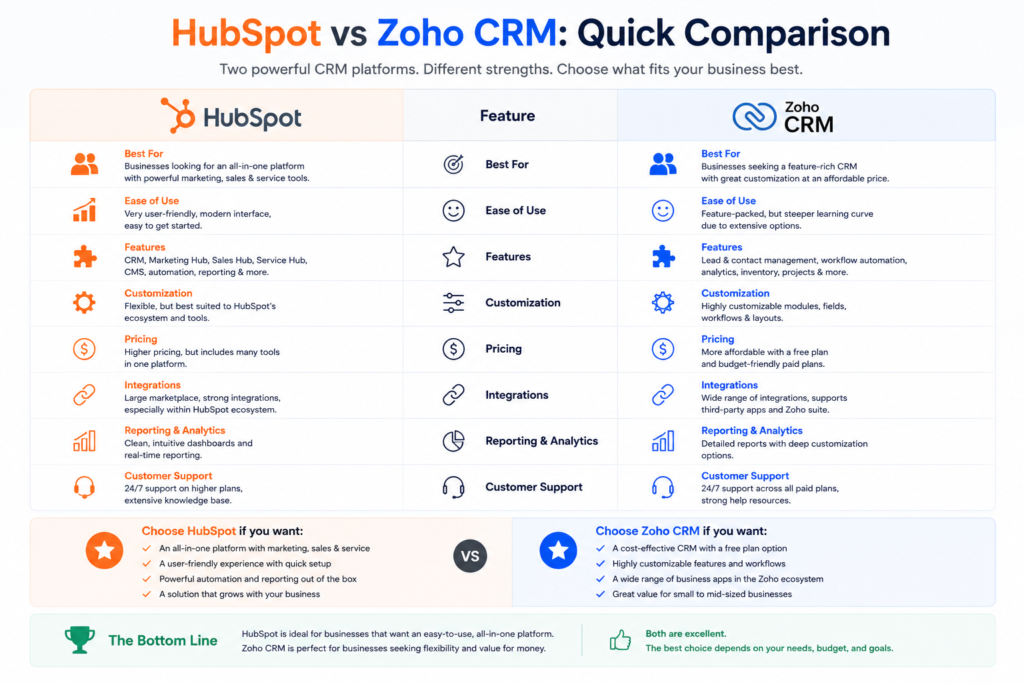
HubSpot vs Zoho CRM: Quick Comparison
| Feature | HubSpot | Zoho CRM |
| Ease of Use | Excellent | Moderate |
| Pricing | Higher | More affordable |
| Free Plan | Strong free CRM | Free for small teams |
| Marketing Automation | Excellent | Very good |
| Customization | Moderate | Advanced |
| Integrations | Extensive | Strong within Zoho ecosystem |
| Learning Curve | Beginner-friendly | Slightly steeper |
| Scalability | Excellent | Excellent |
| Best For | Growing businesses | Budget-conscious businesses |
1. Ease of Use
HubSpot
HubSpot is widely considered one of the easiest CRM platforms to use.
Its interface is:
- Clean
- Modern
- Beginner-friendly
- Well-organized
Most businesses can start using HubSpot quickly without needing technical expertise.
Why Businesses Love HubSpot
- Fast onboarding
- Easy navigation
- Simple automation setup
- Minimal technical complexity
Zoho CRM
Zoho CRM is powerful but slightly more complex.
Because of its customization options, beginners sometimes find the interface less intuitive initially.
Strength of Zoho CRM
- Highly flexible workflows
- Advanced customization
- More control over CRM structure
Winner for Ease of Use:
✅ HubSpot
2. Pricing Comparison
Pricing is one of the biggest differences between the two platforms.
HubSpot Pricing
HubSpot offers:
- Free CRM plan
- Starter plans
- Professional plans
- Enterprise plans
The free version is excellent, but advanced automation and scaling features can become expensive as businesses grow.
Pros
- Strong free plan
- Excellent onboarding
- Premium features
Cons
- Pricing increases quickly
- Enterprise features can become costly
Zoho CRM Pricing
Zoho CRM is significantly more affordable overall.
Even paid plans usually cost less than HubSpot equivalents.
Pros
- Budget-friendly pricing
- Affordable scaling
- Strong feature-to-price ratio
Cons
- Some advanced features require setup customization
Winner for Pricing:
✅ Zoho CRM
3. Marketing Automation
Marketing automation is extremely important for scaling businesses.
HubSpot Marketing Automation
HubSpot is one of the strongest marketing automation platforms available today.
Features Include
- Email automation
- Lead nurturing
- Customer segmentation
- Workflow automation
- Landing pages
- Analytics
HubSpot’s automation system is especially strong for inbound marketing.
Best For
- Content marketing
- B2B lead generation
- SaaS businesses
Zoho CRM Automation
Zoho CRM also offers strong automation features.
Features Include
- Workflow rules
- Sales automation
- Lead scoring
- Multi-step automation
- AI assistant integration
Zoho’s automation is highly customizable but may require more setup.
Winner for Marketing Automation:
✅ HubSpot
4. Customization and Flexibility
Customization becomes extremely important as businesses scale.
Zoho CRM Customization
This is where Zoho CRM becomes very powerful.
Businesses can customize:
- Dashboards
- Modules
- Workflows
- Reports
- Layouts
- Automation systems
Zoho offers more flexibility for businesses with unique operational needs.
HubSpot Customization
HubSpot supports customization but remains more structured and standardized.
This simplicity improves usability but reduces flexibility compared to Zoho.
Winner for Customization:
✅ Zoho CRM
5. Integrations
Both CRMs support numerous third-party integrations.
HubSpot Integrations
HubSpot integrates smoothly with:
- Email marketing tools
- E-commerce platforms
- Analytics systems
- Productivity apps
- SaaS platforms
Its integration ecosystem is extremely polished.
Zoho CRM Integrations
Zoho integrates particularly well within the broader Zoho ecosystem:
- Zoho Books
- Zoho Projects
- Zoho Desk
- Zoho Campaigns
It also supports many external integrations.
Winner for Integrations:
✅ Tie (Depends on business ecosystem)
6. AI Features in 2026
AI is becoming a major part of CRM systems.
HubSpot AI Features
HubSpot now includes:
- AI email generation
- Predictive analytics
- AI content assistance
- Sales forecasting
- Automated recommendations
Zoho CRM AI Features
Zoho’s AI assistant, Zia, offers:
- Lead predictions
- Workflow suggestions
- Anomaly detection
- Sales insights
- AI automation
Winner for AI Innovation:
✅ Slight Edge: HubSpot
7. Customer Support
HubSpot Support
HubSpot is known for:
- Strong onboarding
- Educational resources
- Community support
- Professional documentation
Zoho CRM Support
Zoho offers decent support but experiences can vary depending on the pricing plan.
Winner for Support:
✅ HubSpot
Best CRM by Business Type
Best CRM for Beginners
HubSpot
Best Budget-Friendly CRM
Zoho CRM
Best for Marketing Automation
HubSpot
Best for Customization
Zoho CRM
Best for Startups
Depends on budget:
- Low budget → Zoho CRM
- Growth-focused → HubSpot
Best for Scaling Businesses
HubSpot
Pros and Cons Summary
HubSpot Pros
- Extremely user-friendly
- Powerful marketing automation
- Excellent integrations
- Strong onboarding
- Great reporting
HubSpot Cons
- Expensive at scale
- Advanced features cost more
- Less customizable
Zoho CRM Pros
- Affordable pricing
- Advanced customization
- Strong automation
- Flexible workflows
- Great value for money
Zoho CRM Cons
- Slightly steeper learning curve
- Interface feels more technical
- Setup may require more time
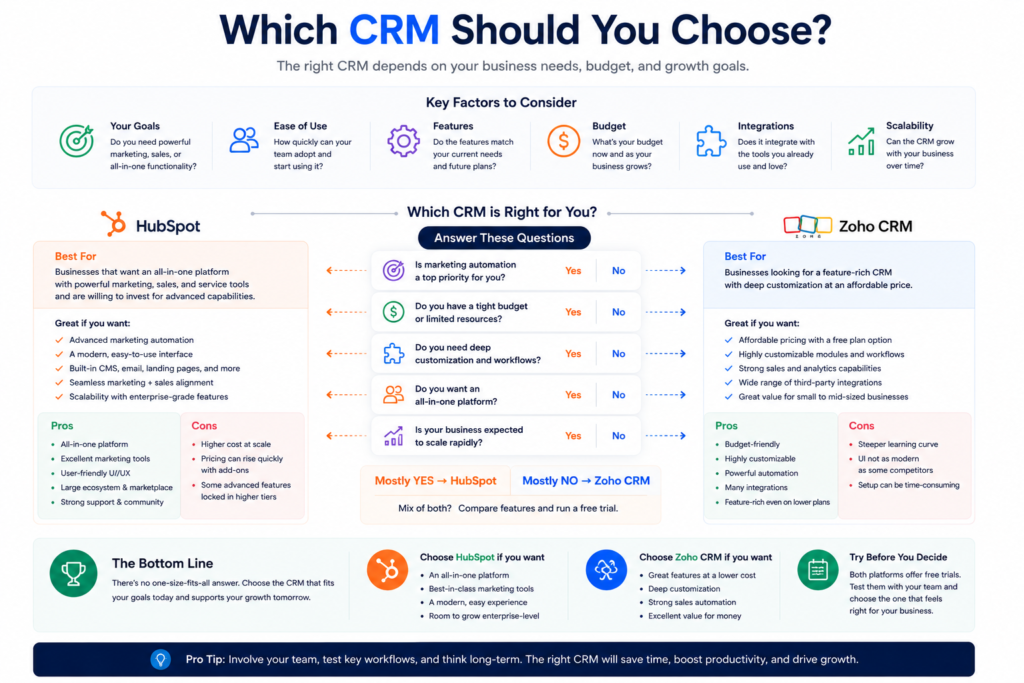
Which CRM Should You Choose?
Choose HubSpot If:
- You want simplicity
- You prioritize marketing automation
- You need strong onboarding
- You want an all-in-one ecosystem
- You have room for higher software budgets
Choose Zoho CRM If:
- You want affordability
- You need customization
- You prefer flexible workflows
- You’re budget-conscious
- You’re comfortable with slightly more technical setup
Final Verdict
Both HubSpot and Zoho CRM are excellent CRM platforms in 2026.
The better choice depends entirely on your business priorities.
- HubSpot is better for businesses wanting simplicity, strong marketing tools, and easy scalability.
- Zoho CRM is better for businesses needing affordability, customization, and operational flexibility.
For many startups and beginners, HubSpot offers the smoother experience.
For businesses prioritizing cost efficiency and advanced customization, Zoho CRM often delivers better long-term value.
The most important thing is choosing a CRM that supports your workflows, team structure, and future growth goals effectively.