Top SaaS Tools Every Business Needs in 2026
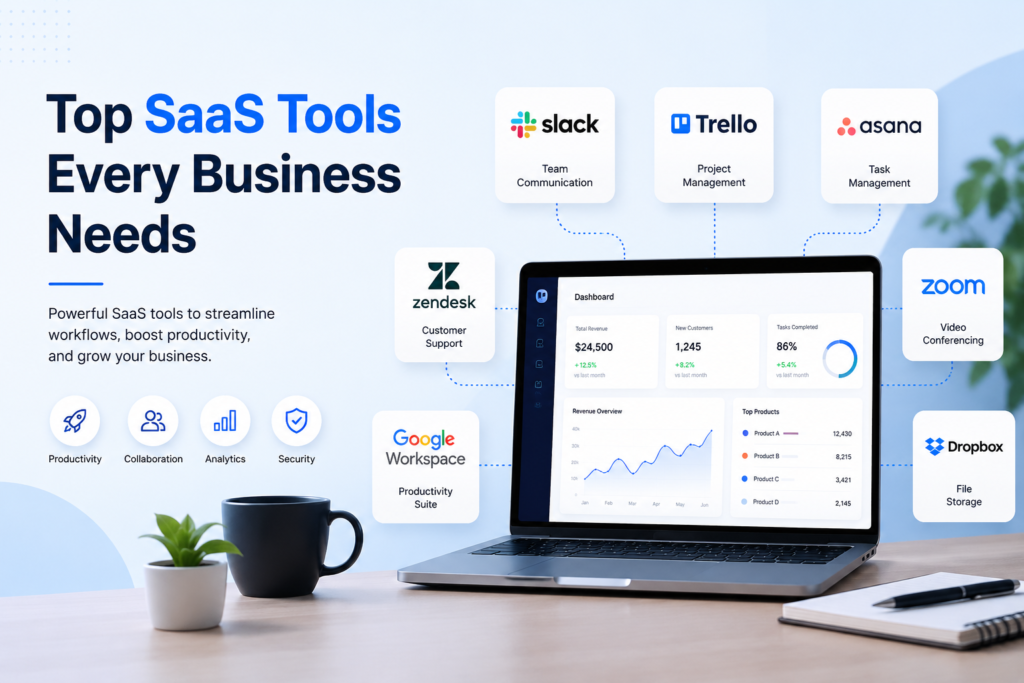
Running a business today is very different from what it was just a few years ago. Teams are more remote, customers expect faster responses, and competition is growing in almost every industry. That’s exactly why SaaS tools have become essential for modern businesses.
Software as a Service (SaaS) solutions help companies automate tasks, improve collaboration, manage customers, and scale operations without investing heavily in infrastructure. Whether you’re running a startup, small business, or growing enterprise, the right SaaS stack can save time, reduce costs, and improve productivity.
In this guide, we’ll cover the top SaaS tools every business needs in 2026 and how they can help your company grow faster.
Why SaaS Tools Matter for Businesses
Before diving into the tools, let’s quickly understand why SaaS software is dominating the business world.
Traditional software often requires:
- Expensive installations
- Hardware maintenance
- Manual updates
- IT management
SaaS platforms eliminate most of these problems. They are cloud-based, subscription-friendly, scalable, and accessible from anywhere.
Key Benefits of SaaS Tools
- Lower operational costs
- Better team collaboration
- Increased productivity
- Automation of repetitive tasks
- Easy integration with other tools
- Remote accessibility
- Regular feature updates
Now let’s look at the most important SaaS categories every business should consider.
1. Project Management Software
Every business needs a reliable way to manage tasks, projects, deadlines, and team communication.
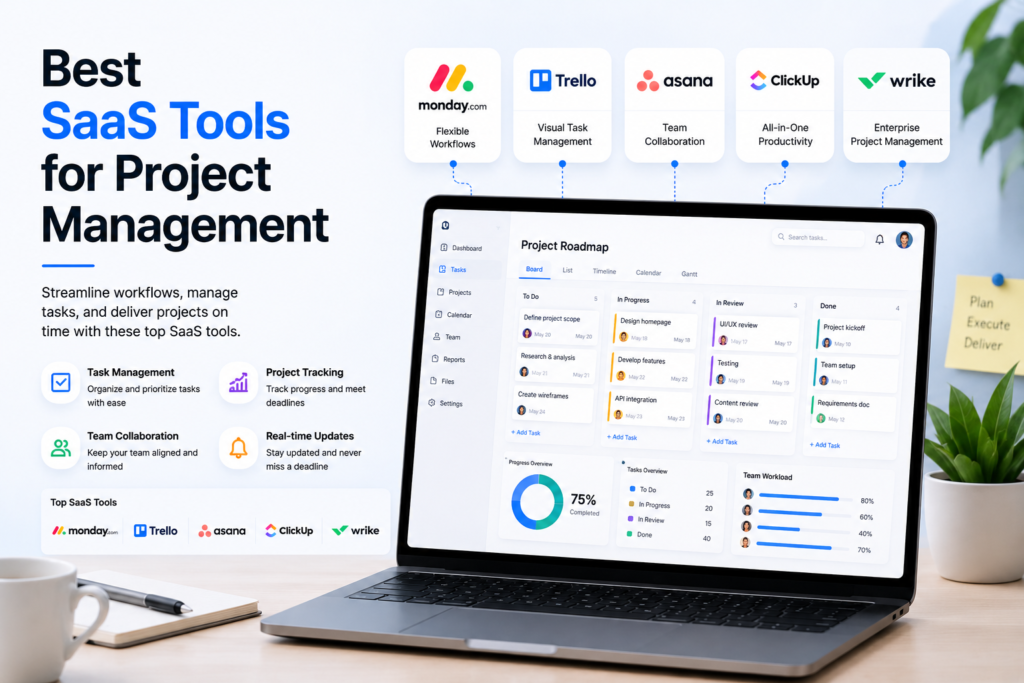
Best SaaS Tools for Project Management
Asana
Asana is ideal for businesses that want clean workflows and task tracking. It helps teams organize projects, assign responsibilities, and monitor progress in real time.
Best for: Marketing teams, startups, agencies
Trello
Trello offers a simple drag-and-drop interface that’s beginner-friendly and highly visual.
Best for: Small teams and freelancers
ClickUp
ClickUp combines project management, docs, goals, time tracking, and collaboration into one platform.
Best for: Businesses wanting an all-in-one solution
2. Communication and Team Collaboration Tools
Clear communication is critical, especially for remote and hybrid teams.
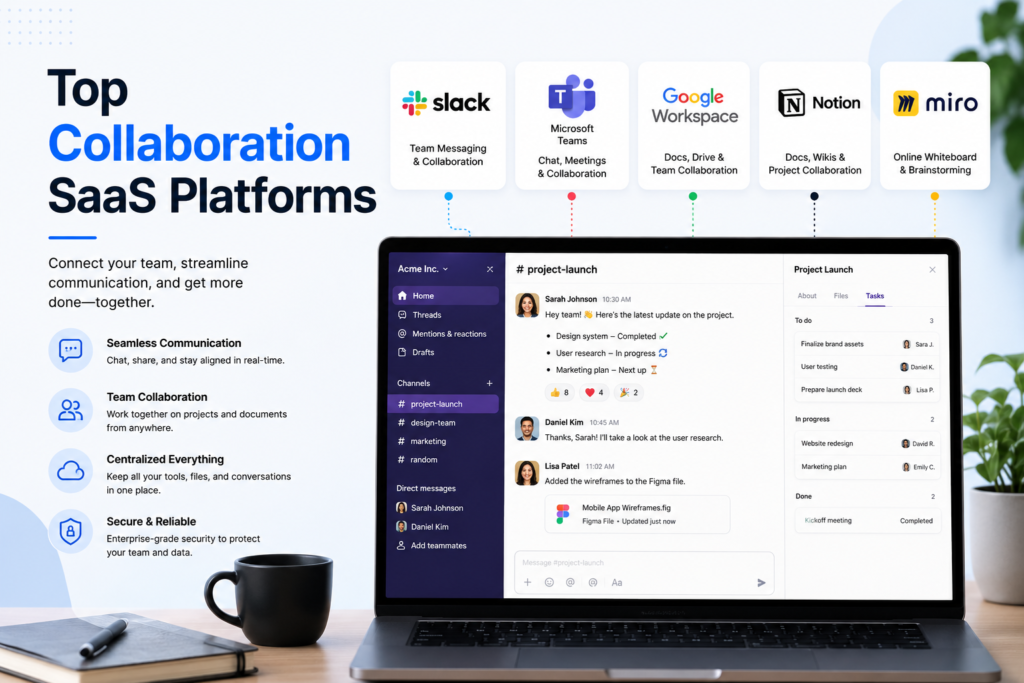
Top Collaboration SaaS Platforms
Slack
Slack has become one of the most popular business communication tools. Teams can create channels, share files, and integrate other apps easily.
Key Features:
- Instant messaging
- Voice/video calls
- Workflow automation
- App integrations
Microsoft Teams
Microsoft Teams works exceptionally well for businesses already using Microsoft 365.
Zoom
Zoom remains a leading video conferencing platform for meetings, webinars, and remote collaboration.
3. CRM Software for Customer Management
Customer Relationship Management (CRM) tools help businesses manage leads, customers, and sales pipelines more efficiently.
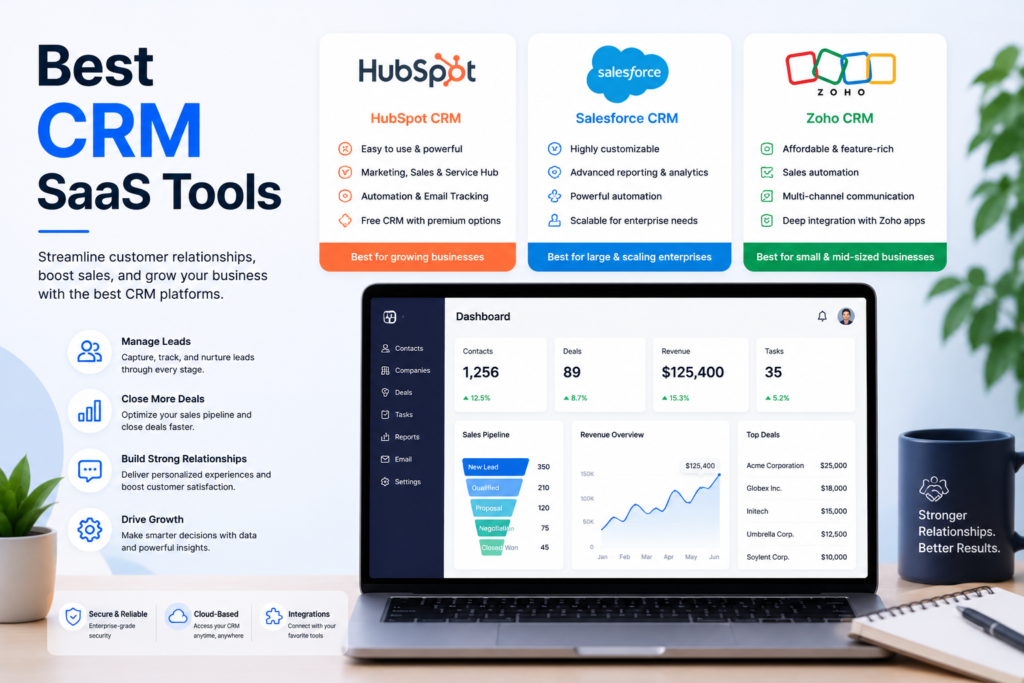
Best CRM SaaS Tools
HubSpot
HubSpot is widely used because of its user-friendly interface and free CRM features.
Best Features:
- Contact management
- Email tracking
- Marketing automation
- Sales pipeline management
Salesforce
Salesforce is one of the most powerful CRM solutions for large-scale businesses.
Zoho CRM
Zoho CRM is affordable and works well for small to medium-sized businesses.
4. Marketing Automation Tools
Marketing automation saves businesses countless hours while improving campaign performance.
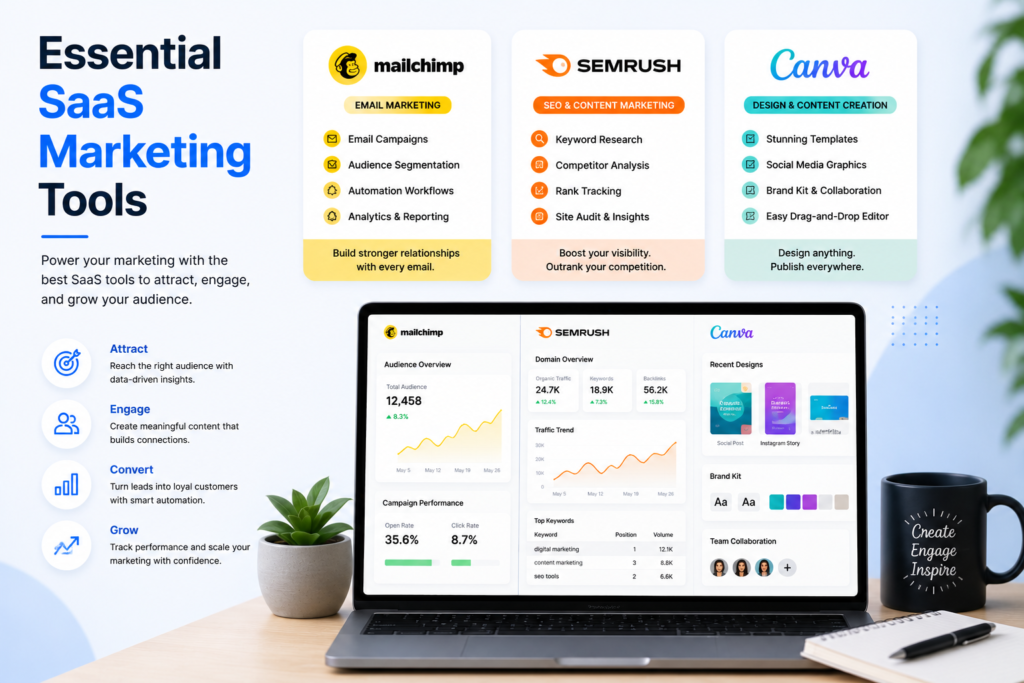
Essential SaaS Marketing Tools
Mailchimp
Mailchimp is excellent for email campaigns, newsletters, and audience engagement.
Semrush
Semrush is one of the best SaaS tools for SEO, keyword research, competitor analysis, and content marketing.
Businesses targeting organic traffic can use Semrush to:
- Find low-competition keywords
- Analyze backlinks
- Improve search rankings
- Track website performance
Canva
Canva helps businesses create professional social media graphics, presentations, ads, and marketing materials without needing advanced design skills.
5. Accounting and Financial Management Software
Managing finances manually is time-consuming and risky. SaaS accounting tools simplify invoicing, expense tracking, payroll, and reporting.
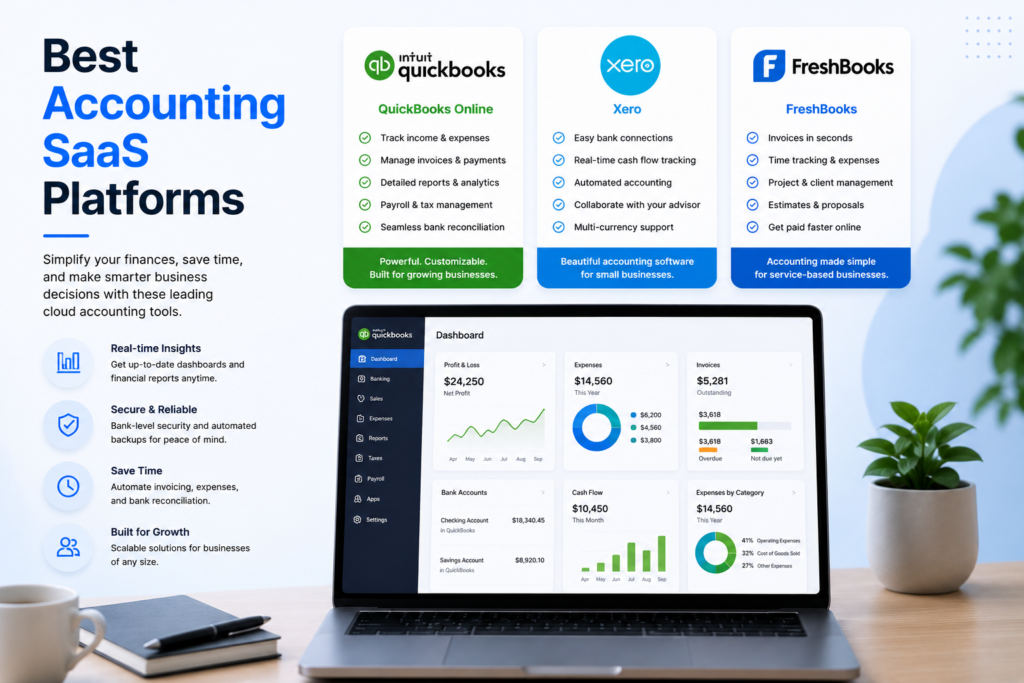
Best Accounting SaaS Platforms
QuickBooks
QuickBooks is one of the most trusted accounting platforms for small businesses.
Xero
Xero offers modern accounting features with a clean interface and strong automation capabilities.
FreshBooks
FreshBooks is especially popular among freelancers and service-based businesses.
6. Cloud Storage and File Management
Businesses generate massive amounts of files, documents, and assets daily. Cloud storage tools help organize and secure important data.
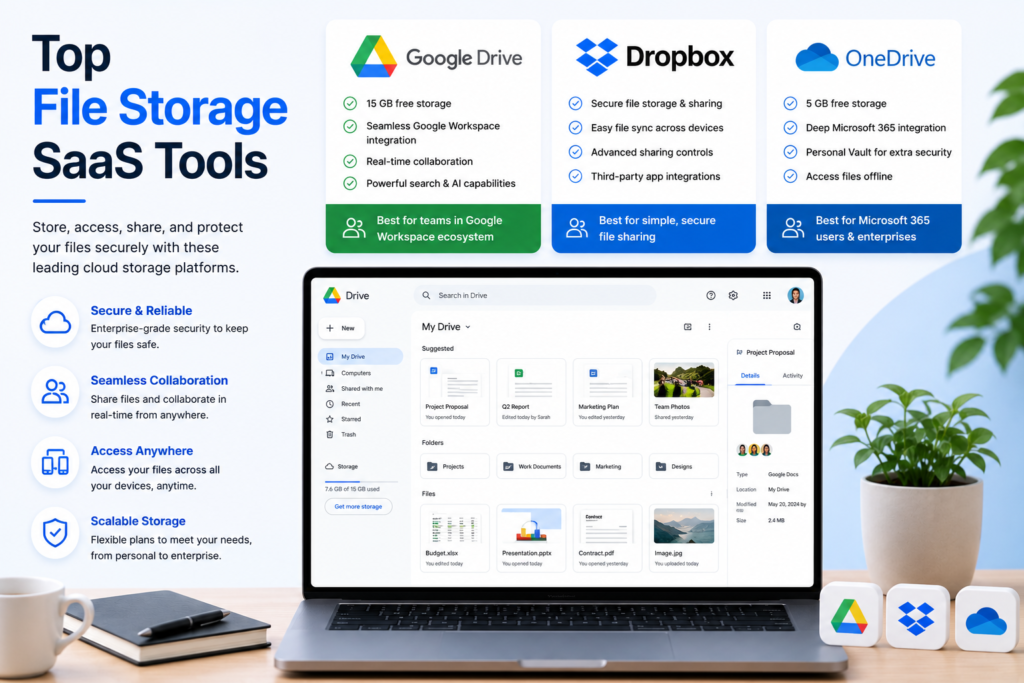
Top File Storage SaaS Tools
Google Drive
Google Drive allows businesses to store files, collaborate in real time, and access documents from anywhere.
Dropbox
Dropbox is known for its simple file synchronization and sharing features.
OneDrive
OneDrive integrates seamlessly with Microsoft Office tools.
7. Customer Support Software
Customer experience can directly impact business growth. Support software helps businesses respond faster and manage customer queries efficiently.
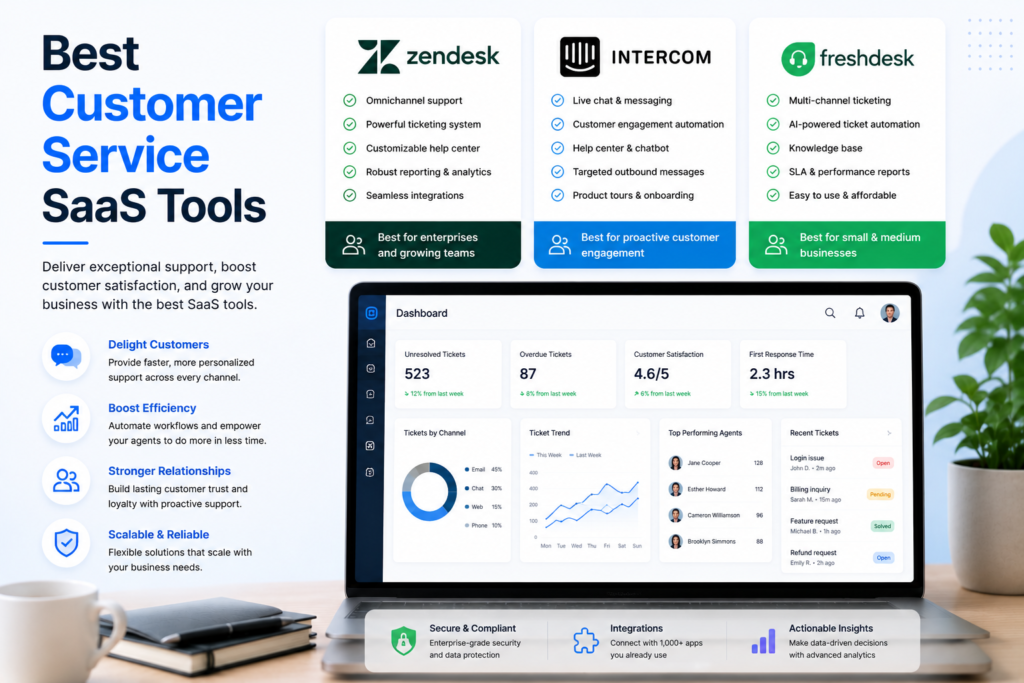
Best Customer Service SaaS Tools
Zendesk
Zendesk provides ticketing systems, live chat, help centers, and automation tools.
Intercom
Intercom combines customer support with AI-powered chat solutions.
Freshdesk
Freshdesk is affordable and ideal for growing businesses.
8. Cybersecurity and Password Management Tools
As businesses move online, cybersecurity becomes more important than ever.
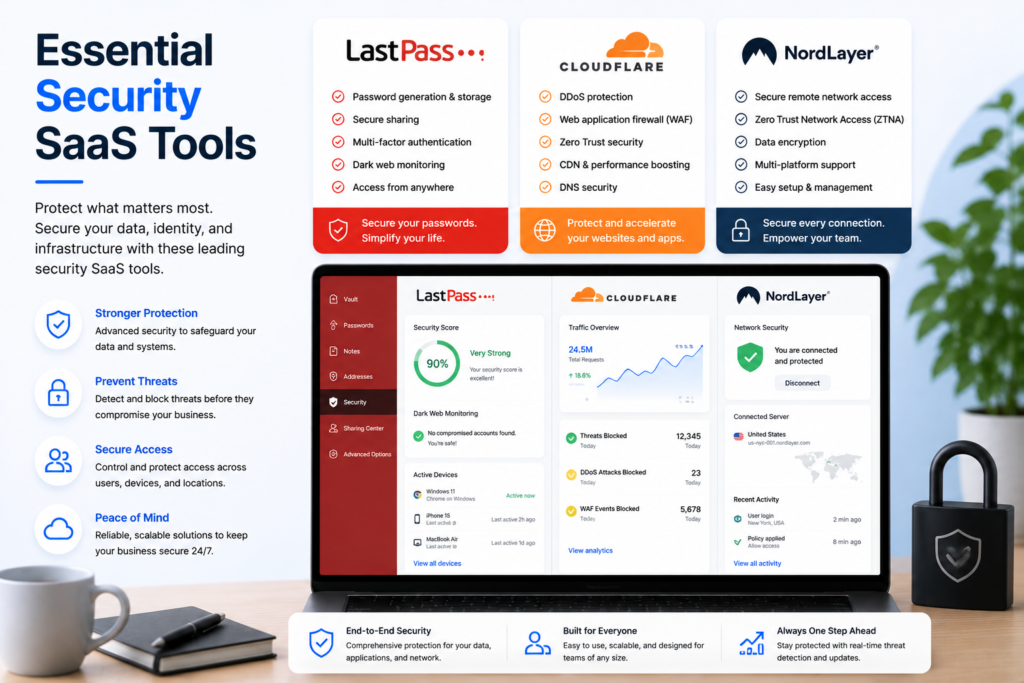
Essential Security SaaS Tools
LastPass
LastPass helps teams store and manage passwords securely.
Cloudflare
Cloudflare improves website security, speed, and protection against cyber threats.
NordLayer
NordLayer helps businesses secure remote teams and sensitive data.
How to Choose the Right SaaS Tools
Not every tool is right for every business. Choosing software should depend on your goals, team size, and budget.
Things to Consider Before Choosing SaaS Software
1. Ease of Use
A complicated platform can reduce productivity instead of improving it.
2. Integration Options
Choose tools that integrate well with your existing software stack.
3. Scalability
Your software should support your business as it grows.
4. Pricing
Compare subscription costs and avoid paying for features you don’t need.
5. Customer Support
Reliable customer support is extremely valuable during technical issues.
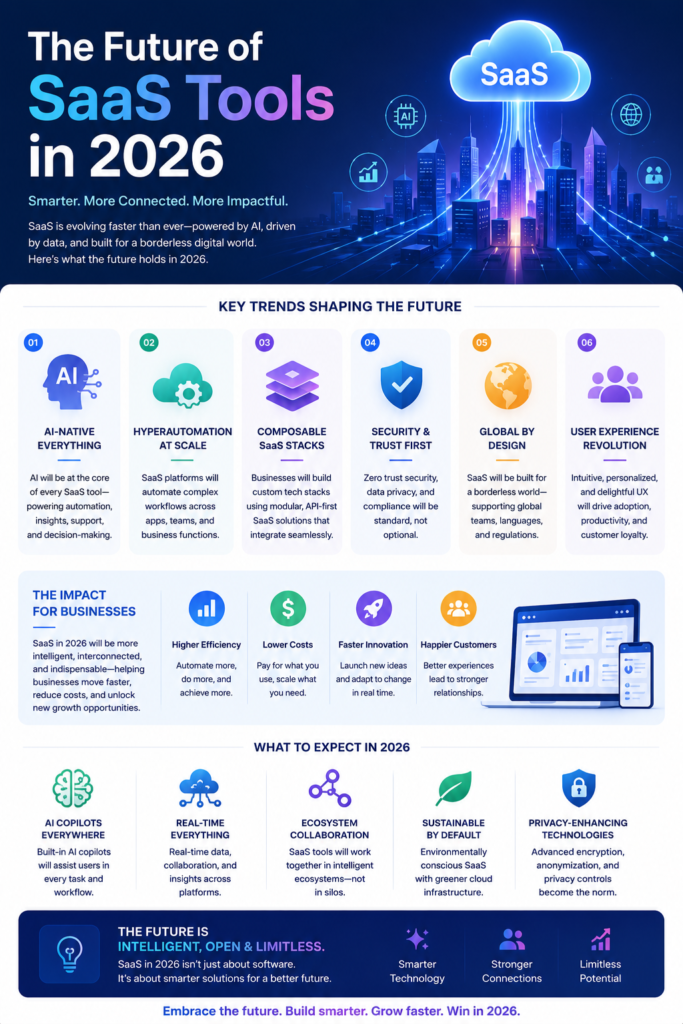
Future of SaaS Tools in 2026
The SaaS industry continues to evolve rapidly. AI-powered automation, predictive analytics, and no-code integrations are becoming standard features.
Businesses are increasingly investing in:
- AI-driven productivity tools
- Automated customer support
- Smart analytics platforms
- Remote collaboration software
- Cloud-based security systems
Companies that adopt modern SaaS solutions early often gain a significant competitive advantage.
Final Thoughts
The right SaaS tools can completely transform how a business operates. From project management and communication to marketing and cybersecurity, modern software solutions help businesses become faster, smarter, and more efficient.
Instead of trying to use dozens of disconnected tools, focus on building a streamlined SaaS stack that supports your workflow and business goals.
Whether you’re a startup founder, agency owner, or enterprise manager, investing in the right SaaS platforms in 2026 is no longer optional — it’s a necessity for growth.
By choosing tools that improve productivity, automate repetitive tasks, and enhance customer experience, businesses can stay competitive in an increasingly digital world.