
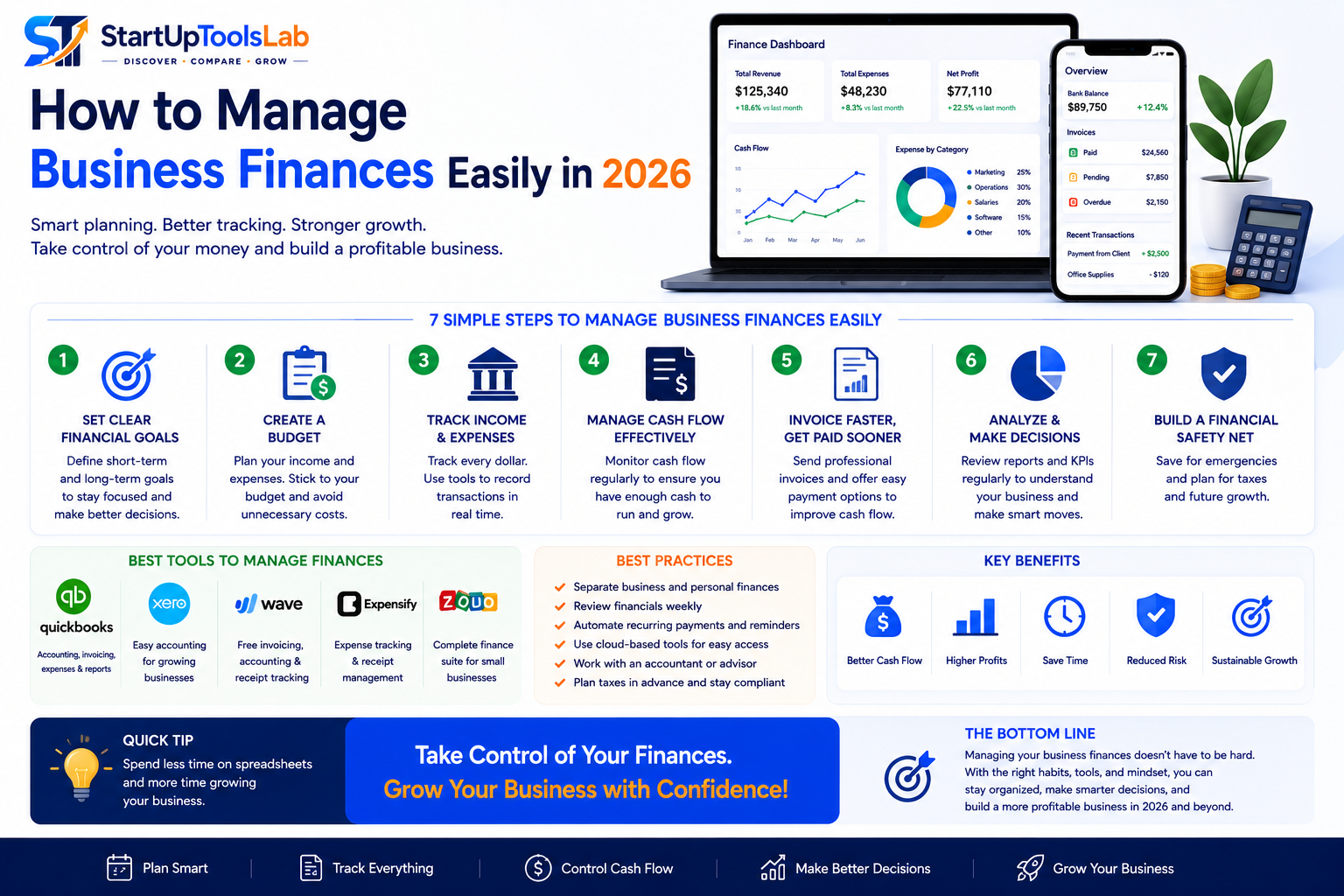
How to Manage Business Finances Easily in 2026
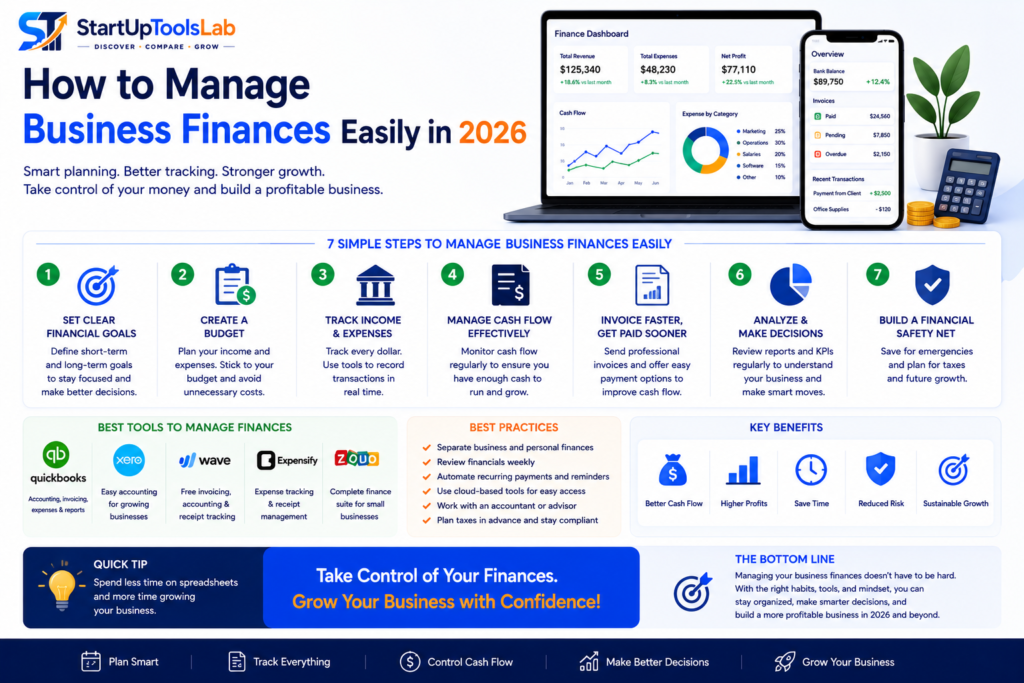
Managing business finances can feel overwhelming, especially for startups, freelancers, and small business owners juggling multiple responsibilities at once.
From tracking expenses and invoices to managing cash flow, taxes, payroll, and budgeting, financial management plays a major role in determining whether a business grows successfully or struggles over time.
The good news is that managing business finances has become much easier in 2026 thanks to modern accounting software, automation tools, AI-powered financial systems, and cloud-based business platforms.
You no longer need to be a financial expert to stay organized.
In this guide, we’ll cover practical ways to manage business finances easily, improve financial organization, reduce stress, and build a stronger financial foundation for long-term business growth.
Why Financial Management Matters for Businesses
Many businesses fail not because of poor products or weak marketing, but because of poor financial management.
Without proper systems, businesses often struggle with:
- Cash flow problems
- Unpaid invoices
- Overspending
- Tax confusion
- Budgeting issues
- Financial disorganization
Strong financial management helps businesses:
- Track profitability
- Improve decision-making
- Reduce unnecessary spending
- Prepare for taxes
- Scale operations confidently
- Maintain financial stability
The earlier you organize your finances, the easier business growth becomes.
1. Separate Personal and Business Finances
One of the biggest mistakes entrepreneurs make is mixing personal and business money.
This creates:
- Accounting confusion
- Tax complications
- Poor budgeting visibility
- Financial reporting problems
What You Should Do
- Open a separate business bank account
- Use a dedicated business card
- Separate personal subscriptions from business expenses
- Track business income independently
Keeping finances separate makes bookkeeping and financial analysis much easier.
2. Use Accounting Software
Manual spreadsheets eventually become difficult to manage as businesses grow.
Modern accounting software automates financial management and reduces errors.
Best Accounting Tools for Small Businesses
QuickBooks
QuickBooks helps businesses manage bookkeeping, invoices, payroll, taxes, and financial reports from one platform.
Xero
Xero offers cloud-based accounting with real-time financial tracking and strong collaboration features.
FreshBooks
FreshBooks is excellent for freelancers and service-based businesses needing simple financial management.
Wave
Wave provides free accounting and expense management tools for startups and small businesses.
Using accounting software saves time and improves financial accuracy significantly.
3. Track Every Business Expense
Small expenses add up quickly.
Many businesses lose money simply because they don’t properly track spending.
Important Expenses to Track
- Software subscriptions
- Advertising costs
- Travel expenses
- Office supplies
- Freelancer payments
- Utility bills
- Marketing expenses
Best Expense Tracking Tools
Expensify
Automates expense reporting and receipt scanning.
Zoho Expense
Offers automated expense tracking and reimbursement management.
Tracking expenses helps businesses:
- Improve budgeting
- Reduce unnecessary costs
- Prepare taxes more easily
- Understand profitability better
4. Monitor Cash Flow Regularly
Profit and cash flow are not the same thing.
A business may appear profitable while still struggling financially because of poor cash flow management.
What Is Cash Flow?
Cash flow refers to the money moving in and out of your business.
Positive cash flow means:
- More money is coming in than going out.
Negative cash flow can create:
- Payment delays
- Debt problems
- Operational issues
Ways to Improve Cash Flow
- Send invoices quickly
- Follow up on late payments
- Reduce unnecessary expenses
- Build emergency reserves
- Avoid overspending during growth phases
Healthy cash flow keeps businesses stable and scalable.
5. Automate Invoicing and Payments
Manual invoicing wastes time and increases the risk of delayed payments.
Modern invoicing tools help automate billing and payment collection.
Best Invoicing Tools
FreshBooks
Offers professional invoices, payment reminders, and expense tracking.
Zoho Invoice
Provides affordable invoicing automation and client management.
PayPal
Simplifies online payments and invoice collection.
Automation helps businesses:
- Get paid faster
- Reduce manual work
- Improve professionalism
- Track payment status easily
6. Create a Monthly Business Budget
A budget gives businesses financial control and visibility.
Without budgeting, businesses often overspend or struggle with unpredictable expenses.
A Good Business Budget Should Include
- Revenue targets
- Fixed expenses
- Variable expenses
- Marketing costs
- Emergency savings
- Growth investments
Budgeting helps businesses make smarter financial decisions and avoid unnecessary risks.
7. Save for Taxes Throughout the Year
One of the most stressful mistakes businesses make is ignoring taxes until deadlines arrive.
Instead of waiting until tax season:
- Save a percentage of every payment
- Organize receipts regularly
- Track deductible expenses
- Use accounting software for tax preparation
Helpful Accounting Tools for Taxes
QuickBooks
Provides tax preparation support and expense categorization.
Xero
Helps organize tax-related financial records efficiently.
Planning for taxes early prevents financial surprises later.
8. Build an Emergency Fund
Unexpected expenses happen in every business.
Examples include:
- Slow sales periods
- Equipment repairs
- Emergency hiring
- Marketing failures
- Client payment delays
An emergency fund provides financial protection during difficult periods.
Financial Experts Commonly Recommend
Saving at least:
- 3–6 months of operating expenses
This creates stronger business stability and reduces financial stress.
9. Review Financial Reports Regularly
Many business owners avoid reviewing financial reports because they seem complicated.
But understanding your numbers is critical for growth.
Important Reports to Review
- Profit and loss statements
- Cash flow reports
- Expense reports
- Revenue trends
- Tax summaries
Financial reports help businesses:
- Identify problems early
- Improve profitability
- Make smarter growth decisions
10. Use AI and Automation for Financial Management
AI-powered financial tools are making business management easier than ever in 2026.
Modern platforms now offer:
- Automated bookkeeping
- AI expense categorization
- Predictive cash flow analysis
- Smart budgeting insights
- Automated invoice reminders
Helpful AI Productivity Tools
OpenAI ChatGPT
Can help businesses:
- Organize financial workflows
- Create budgeting templates
- Draft financial documents
- Simplify reporting explanations
Automation reduces manual work and improves efficiency.
Common Financial Mistakes Businesses Make
Many businesses struggle financially because of avoidable mistakes.
Common Mistakes Include:
- Mixing personal and business finances
- Ignoring cash flow
- Delaying bookkeeping
- Overspending on unnecessary tools
- Not tracking expenses properly
- Avoiding budgeting
- Ignoring financial reports
Strong financial habits create stronger businesses.
Future of Business Finance Management in 2026
Financial technology is evolving rapidly with AI-powered automation and cloud-based systems.
Modern financial tools now include:
- AI bookkeeping
- Automated reporting
- Smart forecasting
- Real-time analytics
- Automated tax calculations
- Predictive budgeting
Businesses that adopt automation early can improve efficiency and significantly reduce financial stress.
Final Thoughts
Managing business finances doesn’t need to feel complicated or overwhelming.
With the right systems, budgeting habits, accounting tools, and automation platforms, businesses can simplify financial management, improve organization, and scale more confidently.
The key is building strong financial habits early:
- Track expenses consistently
- Automate invoices
- Monitor cash flow
- Use accounting software
- Plan for taxes
- Review reports regularly
Whether you’re a freelancer, startup founder, ecommerce owner, or small business operator, mastering your finances is one of the most important steps toward long-term business success in 2026.